If you have been reading about anti-inflammatory foods and wondering whether the hype is deserved, the honest answer is: partly. No single ingredient calms your body on its own, but the overall pattern of what you eat, day after day, does seem to matter for long-term health. This guide covers what the evidence actually supports, what it does not, and how to build meals you will happily enjoy.
Table of Contents
Inflammation: your body’s helpful alarm
Inflammation has a worse reputation than it deserves. When you cut a finger or fight off a cold, your immune system rushes defensive cells to the scene, and the resulting redness, heat and swelling are simply healing in action. That is acute inflammation, and life would be far more dangerous without it.
The trouble is a quieter, different version. Low-grade inflammation that lingers for months or years has been associated in research with conditions such as heart disease and type 2 diabetes. You usually cannot feel it, which is part of why steady daily habits matter more than any dramatic one-off intervention.
Several things can keep that quiet fire smouldering: excess weight around the middle, ongoing stress, broken sleep, too little movement and smoking. Diet interacts with all of them. This is exactly why food is best seen as one supportive piece of a larger picture, not a switch you can flip on its own.
It also helps to be clear about scope from the outset. Food is not a treatment for any diagnosed disease, and no way of eating can undo smoking or replace prescribed medicine. Diet is one lever among several, sitting alongside sleep, movement and stress.
How food fits into the picture
Scientists rarely study single foods in isolation. What they can measure are broad dietary patterns and blood markers of inflammation, such as C-reactive protein. Patterns rich in fibre, unsaturated fats and plant compounds tend to line up with lower marker levels; those heavy in added sugar and heavily processed products tend to line up with higher ones.
That word ‘tend’ is doing real work. Much nutrition evidence is observational, human trials are often short, and findings are not always consistent. Some polyphenol-rich foods that look impressive in a laboratory show little measurable effect on inflammation in people, so it is wise to treat precise promises with healthy caution.
Individual responses vary, too. Genetics, gut bacteria, activity levels and existing health all shape how someone reacts to any way of eating, which is why blanket promises rarely hold for everyone. Thinking in terms of a sustainable pattern, rather than a strict prescription, leaves welcome room for that natural variation.
Seen this way, anti-inflammatory foods are less a special shopping list and more a plain description of the everyday whole foods that make up a balanced plate. The practical message is not ‘eat this one magic berry.’ It is to tilt your plate toward whole, minimally processed foods most of the time, choice after small choice.
It is worth being a little sceptical of the phrase ‘anti-inflammatory diet’ when it appears on packaging or in marketing. The strongest evidence backs a whole way of eating, not a checkout basket of pricey ‘superfoods.’ Chasing individual miracle ingredients tends to cost more and deliver less than simply eating well overall.
The best anti-inflammatory foods to build meals around
The most reassuring thing about anti-inflammatory foods is that they are ordinary, affordable and easy to find, with no exotic powders required. The groups below appear again and again across trusted nutrition guidance.
| Food group | Everyday examples | Why it earns a place |
|---|---|---|
| Vegetables & fruit | Leafy greens, berries, peppers, tomatoes | Fibre plus colourful plant compounds |
| Oily fish | Salmon, sardines, mackerel, trout | Omega-3 fats, widely studied for inflammation |
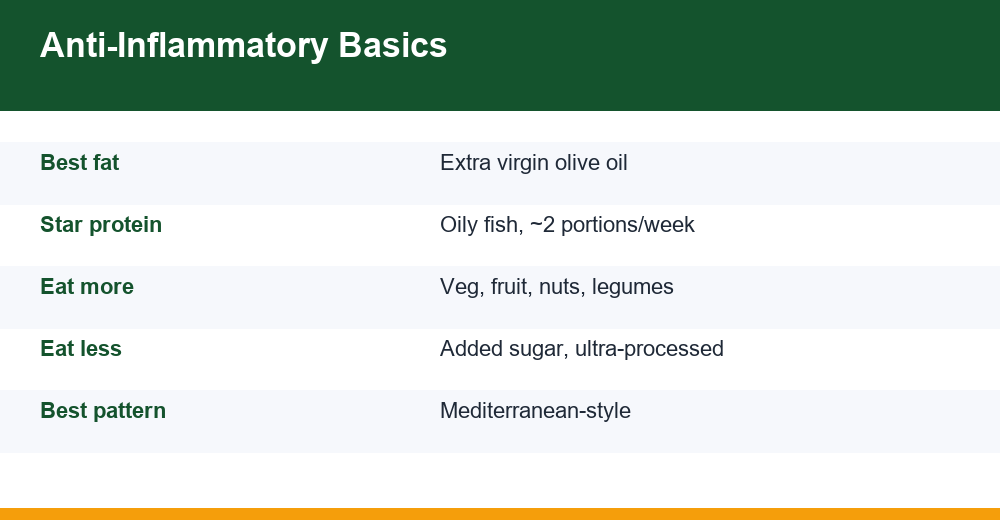
| Extra virgin olive oil | A drizzle for cooking or dressing | Phenolic compounds studied for inflammation |
| Nuts & seeds | Walnuts, almonds, flaxseed, chia | Unsaturated fats and fibre |
| Whole grains & legumes | Oats, brown rice, lentils, beans | Slow-release carbs and gut-friendly fibre |
| Herbs & spices | Turmeric, ginger, garlic | Flavour with a long tradition of use |
A few of these deserve a note. Oily fish is the clearest standout thanks to its omega-3 fats, and around two portions a week is a common suggestion. The berries and leafy greens featured in our guide to everyday superfoods are best treated as part of a colourful, varied plate rather than as stand-alone cures.
Speaking of colour, variety matters as much as any single hero food. Different plants bring different compounds, so ‘eat the rainbow’ is decent shorthand. And a budget-friendly reminder: frozen and tinned vegetables, beans and fish are just as nutritious as fresh, often cheaper, and count fully.
Two quieter heroes also deserve a mention: fibre and fermented foods. Beans, oats, vegetables and fruit feed the helpful bacteria in your gut, while yoghurt, kefir and other fermented foods add to the mix. A steady fibre habit is one of the most reliable, least glamorous things you can do for everyday wellbeing.
One honest caveat on turmeric and ginger. They are delicious, well-tolerated culinary ingredients with a long history of traditional use, but the striking results sometimes quoted come from concentrated extracts, not a pinch in a curry. Enjoy them for their flavour and warmth, not as medicine.
If you want a simple picture to aim for, imagine a plate that is roughly half colourful vegetables, a quarter whole grains or starchy vegetables, and a quarter protein such as fish, beans or lentils, with a little olive oil over the top. It is flexible, forgiving and easy to remember.
Drinks, herbs and everyday extras
What you drink counts too, and here the picture is refreshingly simple. Water is the everyday hero, while unsweetened tea and coffee are fine for most people in normal amounts. Green tea in particular is rich in plant compounds and has a long tradition of daily use, though it is best seen as a pleasant habit rather than a remedy.
Herbs and spices are an easy, low-cost way to make plainer meals sing. Garlic, ginger, turmeric, rosemary and cinnamon all bring flavour along with their own plant compounds. Enjoy them generously for taste, and simply remember that a sprinkle in cooking is a world away from the concentrated extracts sold in capsules.
A few everyday extras round things out nicely: a square or two of dark chocolate, a spoon of live yoghurt, or a small handful of olives. None of these is essential, and none works magic alone. Together, though, these small and enjoyable choices make a whole-food pattern much easier to sustain.
Foods worth enjoying less often
The other half of the picture is just as important and, for many people, easier to act on. The eating pattern most consistently linked with higher inflammation is one built around ultra-processed products and plenty of added sugar.
This does not mean every processed food is suspect. Tinned beans, frozen vegetables, plain yoghurt and porridge oats are all processed and genuinely good for you. The concern sits at the ultra-processed end: items with long ingredient lists, refined starches, added sugars and very little fibre.
- Sugary drinks, energy drinks and sweetened coffees
- Biscuits, pastries, sweets and most packaged desserts
- Processed and cured meats eaten frequently
- Deep-fried foods and typical fast food
- Refined white bread, along with many crisps and packaged snacks
Refined carbohydrates deserve a specific mention. White bread, sugary cereals and many snacks are digested quickly and can send blood sugar climbing sharply, a pattern linked with inflammation over time. Alcohol is worth watching too: modest amounts suit many people, but regular heavy drinking works against you here.
How you cook matters as well. Very high-heat methods such as deep-frying and heavy charring can create compounds linked with inflammation, so lean more often on steaming, roasting, stewing and gentle sautéing. It is a small shift that keeps the foods you already enjoy firmly on the menu.
There is also a plausible mechanism. Research suggests ultra-processed diets can disturb the gut lining and the balance of gut bacteria, which in turn may nudge the immune system toward inflammation. Even so, nothing here needs to vanish completely. A slice of birthday cake belongs in a good life; the aim is simply frequency, making these the occasional guest rather than the daily default.
A Mediterranean-style way of eating
If you would rather have one template than a long shopping list, the Mediterranean-style pattern is the most thoroughly studied. It is less a rigid diet and more a rhythm of eating: vegetables and fruit at most meals, olive oil as the main fat, fish and legumes for protein, whole grains in the mix, and red meat kept occasional.
This way of eating also tends to nourish the gut, and a well-fed microbiome is increasingly linked with a calmer immune response. The overlaps are clear: the fibre-rich plants, legumes and fermented foods that appear here also feature in our roundup of foods for a healthier gut.
You certainly do not need Mediterranean roots to borrow the principles. The same ideas translate into a plate of anti-inflammatory foods almost anywhere: build the meal around plants, add a quality fat, choose a good protein, and lean on herbs and spices for flavour rather than salt.
- Breakfast: oats with berries, walnuts and a spoon of yoghurt
- Lunch: lentil and vegetable soup with wholegrain bread
- Dinner: baked salmon, roasted vegetables and brown rice
- Snacks: fruit, a small handful of nuts, or hummus with carrot sticks
A little planning makes the pattern far easier to keep. Batch-cook a pot of soup or a tray of roasted vegetables, keep tinned beans and frozen fish on hand, and you remove most of the friction. The approach is also wonderfully flexible: the same principles fit Indian, Middle Eastern, Japanese or West African cooking just as comfortably.
Supplements, safety and honest expectations
Before reaching for pills, it is worth knowing that whole foods and supplements are not interchangeable. The benefits seen in diet studies come from whole eating patterns, and isolated supplements frequently fail to reproduce them. Food first is a sound default.
There is a cost angle here as well. You do not need expensive supplements, branded ‘wellness’ foods or a spotless organic shop to eat this way. Lentils, oats, seasonal vegetables, frozen berries and tinned sardines are among the cheapest foods on the shelf, and they do most of the heavy lifting.
A few sensible safety notes are worth keeping in mind:
- Fish-oil and some other supplements can interact with medicines such as blood thinners, so check with a pharmacist or doctor before starting.
- If you are pregnant, planning a pregnancy, or feeding young children, limit oily fish and avoid high-mercury species; the NHS guidance on fish and shellfish sets out safe amounts.
- ‘Natural’ does not mean risk-free: some herbal supplements interact with prescription medication.
- Any new pattern should suit your own allergies, health needs and budget.
Keep expectations realistic, too. Choosing more of these foods is a supportive habit rather than a cure, and it works best alongside good sleep, regular movement and not smoking.
Finally, this article is general information, not medical advice. If you have a diagnosed condition, take regular medication, or notice persistent or worrying symptoms, please talk with a qualified doctor or registered dietitian before making major changes.
Simple swaps to start this week
You do not need a full pantry overhaul to begin, and building meals around anti-inflammatory foods gets easier once a couple of swaps become second nature. Pick two or three changes, let them settle in, and only then add more. Consistency beats a short burst of perfection every time.
- Swap one sugary drink a day for water, tea or sparkling water with lemon.
- Cook with extra virgin olive oil in place of butter where you can.
- Add a portion of vegetables to a meal you already eat regularly.
- Choose wholegrain versions of bread, rice and pasta.
- Aim for one or two oily-fish meals across the week.
Rather than chasing a number on a blood test, notice how you feel over a few weeks. Steadier energy, comfortable digestion and simply enjoying your meals more are all fair signs that a gentler way of eating is settling in.
One last thought: food does its best work in good company. Pairing these habits with regular movement, decent sleep and a little less stress tends to matter more, together, than any of them alone. Be patient and kind with yourself as the changes bed in.
Frequently Asked Questions
Can an anti-inflammatory diet cure arthritis or other conditions?
No. These foods may support general wellbeing and are often suggested as part of a healthy lifestyle, but they do not cure or treat any diagnosed disease. Keep following your doctor’s plan, and treat food as a helpful complement rather than a replacement for proper medical care.
How long before I notice any difference?
Honestly, it varies, and there is no guaranteed timeline. Some people report steadier energy or easier digestion within a few weeks, while any effects on long-term health build slowly over months and years. Focus on habits you can happily sustain rather than a quick fix.
Do I have to give up sugar and all processed food?
No. The evidence points to overall balance, not strict elimination. Enjoying an occasional treat is completely compatible with a healthy pattern. The goal is to make heavily processed products and added sugar the exception across your week rather than the daily default.
Are supplements like fish oil or turmeric worth taking?
For most people, whole foods are the safer and more effective first choice. Supplements can interact with medication and rarely match the benefits of a full diet. If you are considering them, especially alongside prescriptions, check with a pharmacist or doctor before you start.