
When people talk about gut health foods, they usually mean the everyday ingredients that help the trillions of microbes living in your digestive system thrive. The good news is that most of these foods are simple, affordable and probably already in your kitchen. This guide walks through twelve of the best picks, the science as it actually stands, and how to build them into ordinary meals without overhauling your life.
Table of Contents
Your Gut Microbiome, Explained Simply
Your gut is home to a vast community of bacteria, fungi and other microbes, often called the gut microbiome. These tiny residents help you break down fibre, make some vitamins, keep the gut lining healthy and take part in training your immune system.
Scientists are still working out exactly how all of this fits together, and it is genuinely an area where the evidence is evolving. What seems reasonably consistent so far is that a more diverse microbiome tends to line up with better digestive comfort, and that daily food choices are one of the biggest levers you can pull.
It also helps to set realistic expectations. There is no single perfect microbiome, no universal ideal to chase, and no meal that resets everything overnight. A useful way to picture it is as a garden you tend slowly, feeding the helpful residents and giving them the conditions to flourish.
You might wonder what healthy digestion actually feels like. For many people it means comfortable, fairly regular bowel habits, less bloating and steady energy, though these vary a lot from person to person. Because the signs are so individual, it is worth paying attention to your own baseline rather than comparing yourself to anyone else.
Why the Right Gut Health Foods Make a Difference
When you eat plants, your body cannot digest all of the fibre they contain. The leftover fibre travels to your large intestine, where microbes ferment it and release short-chain fatty acids, compounds associated with a healthier gut barrier and general digestive wellbeing.
This is why the most useful of these foods are usually high in fibre and eaten as part of a mix rather than on their own. Different microbes prefer different fibres, so a repetitive diet ends up feeding only a narrow slice of the community while others go hungry.
Fermented foods play a different role. Rather than only feeding the microbes you already have, they can introduce live cultures and their helpful by-products, which may support diversity when you eat them regularly over time.
Fibre is not the only thing your microbes appreciate. Plant compounds called polyphenols, found in berries, tea, olive oil, herbs and even dark chocolate, also reach the gut and interact with its residents. This is another reason a colourful, plant-rich plate tends to do more than any single so-called super ingredient.
Fibre First: The Foundation of a Healthy Gut
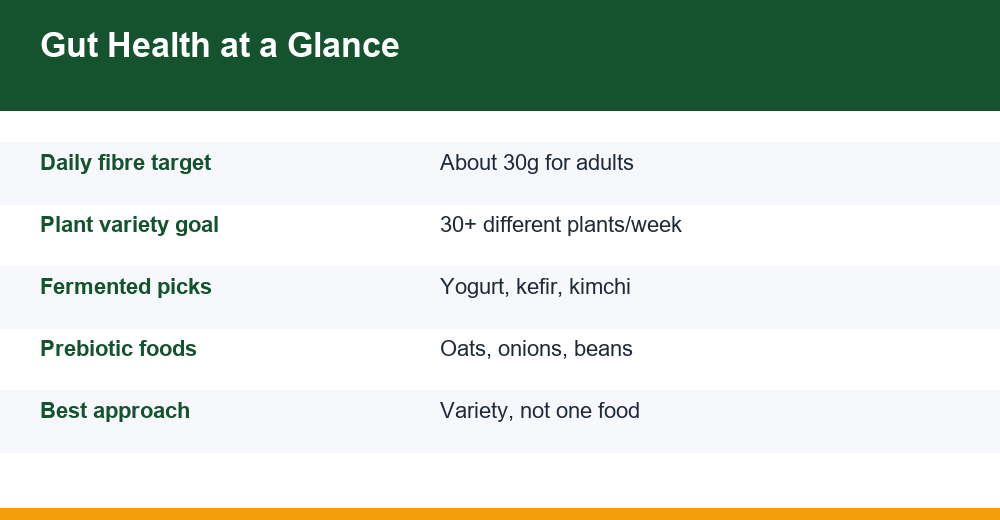
Fibre is the closest thing there is to a foundation for digestive wellbeing, yet most of us fall short of the amount suggested. For a reliable benchmark, the NHS recommends adults aim for around 30g of fibre a day, while typical intakes sit closer to 20g.
Some fibres double as prebiotics, meaning they specifically nourish beneficial bacteria. Helpfully, you do not need special products to find them, as they turn up across ordinary wholegrains, pulses, vegetables and fruit that are inexpensive and widely available.
It also helps to know that fibre comes in more than one form. Soluble fibre, found in oats, apples and beans, dissolves into a gel that gut microbes ferment readily, while insoluble fibre, common in wholegrains and vegetable skins, mostly adds bulk and keeps things moving. A varied plate naturally supplies both, so there is no need to track them separately.
- Wholegrains such as oats, barley and wholegrain rye
- Pulses including lentils, chickpeas and kidney beans
- Alliums like onions, leeks and garlic
- Vegetables such as asparagus, artichokes and cabbage
- Fruit including firm, slightly under-ripe bananas and apples
How much is enough, and where to find it
Rather than counting grams obsessively, use simple anchors: a portion of wholegrains at most meals, a daily serving of beans or lentils, and vegetables or fruit at every opportunity. A handy bonus is resistant starch, which forms when you cook and then cool foods such as potatoes, rice and pasta before eating them.
If your current diet is low in fibre, add these foods gradually and drink plenty of water alongside them. A sudden jump often causes bloating and wind while your microbes adjust, which puts people off before the benefits have a chance to arrive.
Fermented Foods and Live Cultures
Fermented foods have a long history in traditional kitchens around the world, from Korean kimchi to Central European sauerkraut and the cultured milks of many regions. During fermentation, microbes transform the food and, in many cases, leave behind live cultures that can reach your gut.
A small but interesting body of research suggests that regularly eating a range of fermented foods may help increase microbiome diversity. It is a promising picture rather than a settled one, so it is fair to enjoy these foods as a tasty daily habit rather than treating them as a remedy.
- Live or ‘bio’ yogurt with active cultures
- Kefir, a tangy fermented milk drink
- Unpasteurised sauerkraut and kimchi from the chiller
- Miso and tempeh, both made from fermented soya
For living cultures, look for products kept in the fridge and labelled ‘live’ or ‘active’. Shelf-stable, heavily pasteurised versions can taste similar but usually contain few or no living microbes, since heat treatment tends to remove them.
It is also worth knowing that not every fermented food delivers live cultures to your plate. Bread, most beer and wine, and pickles made with vinegar rather than a live brine are all processed or cooked in ways that remove the microbes. Enjoy them for their own sake, but rely on yogurt, kefir and chilled, unpasteurised vegetables when live cultures are what you are after.
If fermented foods are new to you, start with a spoonful rather than a bowlful. A tablespoon of sauerkraut alongside a meal, or a small glass of kefir, is plenty to begin with. You can build up as your gut gets used to them and as you discover the flavours you actually look forward to.
12 Best Foods for a Healthy Gut
Here are twelve dependable gut health foods that, between them, cover fibre, prebiotics and live cultures. Rather than eating the same one every day, try to rotate through as many as you can across a typical week.
| Food | Category | Why it helps |
|---|---|---|
| Oats | Prebiotic fibre | Beta-glucan fibre microbes ferment |
| Lentils | Fibre & protein | Plant fibre plus resistant starch |
| Onions & garlic | Prebiotic | Feed beneficial gut bacteria |
| Asparagus | Prebiotic fibre | Rich in inulin-type fibre |
| Firm bananas | Prebiotic | Resistant starch when slightly green |
| Apples | Fibre | Pectin, a fermentable fibre |
| Live yogurt | Fermented | Adds active live cultures |
| Kefir | Fermented | Diverse live cultures in a drink |
| Sauerkraut | Fermented | Live cultures if unpasteurised |
| Kimchi | Fermented | Live cultures plus vegetables |
| Barley & rye | Wholegrain fibre | Varied fibres for varied microbes |
| Nuts & seeds | Fibre & healthy fats | Fibre plus beneficial polyphenols |
No single item on this list is magic on its own. Their real strength lies in combining several across the week, and in how consistently they show up on your plate. Use the table as a menu to pick from, not a checklist to complete in a single day.
Eat the Rainbow: Why Variety Beats Any Single Food
If there is one clear message from recent microbiome research, it is that variety matters more than any single ingredient. One large citizen-science project reported that people eating more than thirty different plant types a week tended to have more diverse gut microbiomes than those eating ten or fewer.
Plants count broadly here: vegetables, fruit, wholegrains, nuts, seeds, herbs and spices all add to your weekly tally. Thirty sounds like a lot, but a mixed salad, a handful of nuts and a scatter of herbs can add several in a single meal. Many colourful choices also overlap with anti-inflammatory foods, so you get more than one benefit from the same shopping basket.
You certainly do not need expensive powders to reach the mark. If you enjoy discovering nutrient-dense ingredients, our superfoods guide is a good place to widen your range, though the everyday beans, oats and cabbage still do most of the heavy lifting.
Herbs and spices are an easy, low-effort win. A sprinkle of mixed herbs, a spoon of ground spices in a stew, or a handful of fresh coriander all count towards your plant variety while adding flavour that makes vegetables more appealing in the first place.
- Keep mixed frozen vegetables on hand for quick meals
- Add a spoonful of mixed seeds to breakfast or salads
- Rotate your grains: oats, barley, brown rice, quinoa
- Use herbs and spices generously, since they count too
Safety, Sensible Portions, and Getting Started
Most gut health foods are safe for the general population, but a handful of sensible cautions are worth knowing before you dive in.
Increase fibre gradually and keep your fluids up, particularly if your diet has been low in it until now. Going from very little to a lot overnight is the single most common cause of bloating and discomfort.
Fermented vegetables such as sauerkraut and kimchi can be high in salt, so keep portions modest if you are watching your sodium. Some people are also sensitive to the natural histamines in aged and fermented foods and may notice symptoms, in which case it is worth easing in slowly.
If you ferment foods at home, follow a tested, reputable recipe for salt ratios, timing and storage, because correct technique is what keeps them safe. When you are unsure, buy from a trusted producer instead of improvising.
People with conditions like IBS sometimes find that certain high-fibre or prebiotic foods, including onions, garlic and beans, trigger symptoms. If you are pregnant, feeding young children, taking medication that can interact with foods, or living with a digestive condition, speak with a qualified professional before making major changes.
One interaction worth flagging is vitamin K, which is plentiful in leafy greens and some fermented foods. If you take the blood thinner warfarin, large or sudden changes in how much of these foods you eat can affect how well the medication works, so keep your intake steady and let your prescriber know before overhauling your diet.
Finally, this article is general information about food and lifestyle, not medical advice, and none of these foods treat or cure any illness. Persistent changes in digestion, ongoing pain, bleeding or unexplained weight loss deserve proper attention, so see a doctor rather than trying to manage them with diet alone.
Putting It on Your Plate
Building better digestive habits does not need a rigid plan or a full pantry overhaul. The most reliable way to eat more of these foods is through small, repeatable changes that you can genuinely keep up over time.
- Start the day with oats or wholegrain toast, topped with fruit.
- Build lunch around a plant: beans, lentils or a big pile of veg.
- Add a small serving of a fermented food you actually enjoy.
- Choose nuts, seeds or fruit over ultra-processed snacks.
- Introduce one or two new plants each week to widen your range.
A realistic day might look like porridge with berries and a spoon of seeds at breakfast, a lentil soup or a bean-topped salad at lunch, and a vegetable-rich dinner with a wholegrain such as barley or brown rice. A small glass of kefir or a forkful of kimchi slots in wherever it suits you. Nothing here is rigid; it is simply a template to bend around your own tastes and routine.
Over a week, aim for a loose rhythm rather than perfection: plenty of different plants, a regular fermented food, and wholegrains in place of refined ones where you can. Missing a day changes nothing, because it is the overall pattern across weeks and months that your microbiome responds to.
Consistency beats intensity every time. Feed your microbes a wide, mostly plant-based diet, add fermented foods if you like the taste, and let these small daily choices accumulate over months rather than expecting results in days.
Frequently Asked Questions
What are the best gut health foods to start with?
Start with everyday fibre-rich foods like oats, beans and mixed vegetables, plus one fermented food you enjoy, such as live yogurt or kefir. There is no need for expensive supplements. Variety matters more than any single item, so rotate your choices across the week.
How long does it take to improve gut health?
Gut bacteria can respond to dietary changes within a few days, but meaningful, lasting shifts usually take weeks of consistent eating. Think in terms of months rather than a quick fix. The most reliable results come from steady habits, not short, intense cleanses or detox plans.
Do I need probiotic supplements?
For most healthy people, food comes first. Fermented foods and a varied, high-fibre diet support your microbiome without pills. Supplement evidence is mixed and often strain-specific, so they are not essential for everyone. If you are considering one for a specific reason, ask a qualified professional first.
Can gut health foods cause bloating?
Yes, especially if you add fibre or fermented foods too quickly. Increase amounts gradually, drink enough water, and give your microbes time to adjust. If bloating is severe, persistent or painful, or comes with other symptoms, see a doctor rather than pushing through it.