
If you are exploring essential oils for beginners, the most useful thing to learn first is not which scent to buy but how to use these concentrated plant extracts safely and with realistic expectations. Aromatherapy carries a long, comforting history in natural living, yet a tiny bottle holds a surprisingly potent ingredient that deserves respect. This guide walks you through the basics, the popular oils, honest evidence and the simple safety habits that make the whole experience a lasting pleasure.
Table of Contents
What Aromatherapy Actually Is
An essential oil is a highly concentrated liquid captured from a plant, usually through steam distillation or, in the case of citrus, by cold pressing the peel. It can take a remarkable amount of raw material, sometimes dozens of roses or great handfuls of lavender, to fill one small bottle. That concentration is precisely why the aroma is so vivid, and also why a single drop travels a very long way.
Aromatherapy is simply the practice of using these plant aromas to support everyday mood and wellbeing. It is best understood as a calming, sensory ritual rather than a medicine cabinet. Respected health sources describe it as a complementary practice, and while some small studies suggest scents such as lavender or peppermint may help people feel calmer or sleep a little better, the evidence so far remains limited and mixed.
It is worth setting honest expectations from the start. Essential oils are not medical treatments, and they should never replace advice or care from a qualified professional. For anyone new to aromatherapy, treating them as part of a relaxing lifestyle, much like a warm bath or a cup of herbal tea, keeps the whole practice both safe and thoroughly enjoyable.
Essential Oils for Beginners: A Simple Starting Point
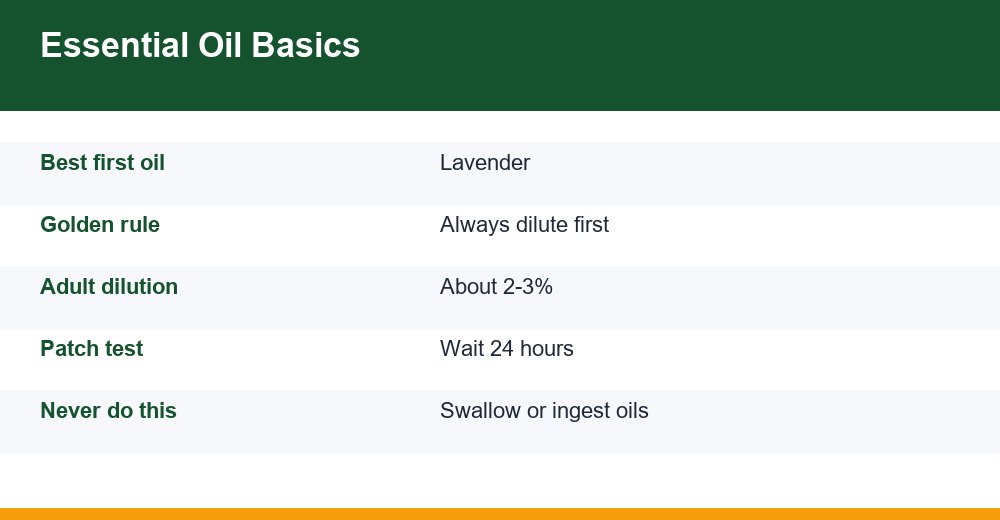
The biggest mistake at the very start is buying too much, too fast. A focused approach to essential oils for beginners means choosing two or three versatile oils, learning how they behave, and expanding slowly once you feel confident. Lavender, sweet orange and tea tree make a forgiving, versatile trio to begin with.
Quality matters far more than a pretty label. Before you buy, check that the bottle actually tells you what is inside:
- The plant’s botanical (Latin) name, such as Lavandula angustifolia, rather than just the word ‘lavender’.
- The country of origin and, ideally, the part of the plant that was used.
- A dark amber or cobalt glass bottle, which shields the oil from light.
- The words ‘pure essential oil’, not ‘fragrance oil’ or ‘perfume oil’, which are synthetic scents.
Be gently sceptical of marketing, too. Phrases such as ‘therapeutic grade’ are not regulated standards, so on their own they guarantee nothing about purity or quality. Store your oils somewhere cool and dark with the caps tightly closed, because heat, light and air slowly break them down. Citrus oils in particular can oxidise within a year or two, which changes both their scent and how kind they are to skin.
You also do not need to spend a fortune. A couple of small bottles from a reputable supplier will comfortably see you through your first few months, and buying little means you can experiment without waste as your tastes settle in.
Popular Essential Oils and Their Traditional Uses
Every oil has its own personality and a history of traditional use, from bright citrus peels to deep, resinous woods. The table below is a simple overview of common favourites and how people tend to enjoy them. These are traditional, everyday uses rather than medical claims, and none is a treatment for illness. Exploring scent families like this is one of the quiet pleasures of essential oils for beginners.
| Oil | Traditional, everyday uses | Good to know |
|---|---|---|
| Lavender | Relaxation, winding down, gentle skincare | Widely tolerated; a classic first oil |
| Tea tree | Spot use, blemish-prone skin, cleaning | Topical only; never swallow it |
| Peppermint | Refreshing, focus, easing a stuffy feeling | Keep away from babies and young children |
| Sweet orange | Uplifting, bright, cheerful diffusing | Gentle, but citrus can mark skin in sun |
| Eucalyptus | Clearing, invigorating steam inhalation | Not for young children or pets |
| Roman chamomile | Calming, soothing bedtime routines | Popular in gentle relaxation blends |
| Frankincense | Grounding, meditation, mature skincare | Resinous and long-lasting in storage |
As you grow more confident, you can start to blend. Scents tend to fall into families such as florals, citruses, herbs and woods, and oils from the same or neighbouring families usually sit well together. A drop of citrus alongside a floral, for example, makes a bright, uplifting combination for the diffuser.
A few of these oils deserve extra respect. Tea tree oil should never be swallowed, and citrus oils such as sweet orange, lemon and bergamot can make skin more sensitive to sunlight after topical use. Strong oils like peppermint and eucalyptus are best kept well away from babies, young children and pets.
Dilution, Carrier Oils and Patch Testing
Because essential oils are so concentrated, they should almost never meet your skin undiluted. Instead they are blended into a carrier oil, a plain vegetable oil that spreads the tiny quantity of essential oil safely across a wider area and softens its intensity. Sweet almond, jojoba, grapeseed, fractionated coconut and even olive oil are all popular, affordable choices for this.
Carrier oils are not all the same, so it is worth trying a couple to see what your skin prefers. Fractionated coconut oil is light and rarely marks fabric, jojoba closely mirrors the skin’s own oils and keeps for a long time, while sweet almond feels richer and more nourishing. Whichever you pick, buy a fresh bottle, store it away from heat, and replace it if it ever smells sharp or rancid.
Dilution is usually described as a percentage, meaning how much essential oil sits within the finished blend. The guide below reflects commonly cited ranges for healthy adults. Treat them as sensible starting points rather than prescriptions, and always go lower if your skin tends to be reactive.
| Who or where | Typical dilution | Drops per 10 ml carrier |
|---|---|---|
| Adult, general body | 2-3% | about 6-9 drops |
| Face and sensitive skin | 1% | about 3 drops |
| Children aged 2 and over | 0.5-1% | about 1-3 drops |
| Babies and toddlers | Ask a professional first | – |
Always patch test a new oil before wider use. Dab a little of the diluted blend onto the inside of your forearm, cover it, and wait a full 24 hours. If you notice redness, itching, swelling or any discomfort, wash it off and avoid that oil in future. This small step is easy to skip and well worth the wait.
If you would like to fold a favourite scent into your natural skincare routine, add only a drop or two to an unscented base and keep the dilution low, especially anywhere on the face.
Safe Ways to Enjoy Essential Oils at Home
There are several relaxing, low-risk ways to bring aromatherapy into daily life, and this is where essential oils for beginners begins to feel truly rewarding. Most people begin with the air rather than the skin, which is a sensible instinct.
- Diffusing: add a few drops to an electric diffuser and run it in short sessions of around 30 to 60 minutes in a well-ventilated room.
- Simple inhalation: a drop on a tissue or cotton pad, held a little away from the face, is a quick way to enjoy a scent.
- Diluted topical use: massage a properly diluted blend into the skin for a slow, calming ritual.
- Around the home: a few drops can freshen a room spray or add scent to unscented, homemade cleaners.
When choosing a diffuser, a simple ultrasonic model that mists water with a few drops of oil is ideal for beginners, since it spreads scent gently without heat. Run it in a room you can air out, take breaks rather than leaving it on all day, and start with fewer drops than you think you need. You can always add more, but a lighter touch is kinder to sensitive noses and lungs.
For a gentle first blend, try a couple of drops of lavender with one of sweet orange in your diffuser during the evening. It is a soft, cosy combination that many people find relaxing before bed, and it costs almost nothing to put together once you own the two oils.
That last idea overlaps neatly with a broader move toward gentler housekeeping. Oils such as lemon and tea tree are popular additions to natural cleaning products, lending a fresh scent to simple, homemade mixes without harsh synthetic fragrance.
One rule stands above all the others. Never ingest essential oils or add them to food or drink unless a suitably qualified practitioner has specifically advised it. Even a small amount of a concentrated oil can be harmful when swallowed, so keep them for the air and, once properly diluted, the skin.
Safety First: Children, Pregnancy and Pets
A little caution is what makes aromatherapy something a whole household can enjoy comfortably. Some groups simply need gentler treatment, and a handful of oils are best avoided altogether depending on who, and what, is nearby.
For children, use much lower dilutions, choose only mild oils, and always keep bottles locked away out of reach, since swallowing even a small quantity can be dangerous. Strong oils such as peppermint, eucalyptus and rosemary are generally not recommended for babies and very young children at all.
Pregnancy and breastfeeding call for extra care, as several oils are traditionally avoided during this time. Mayo Clinic Health System offers a helpful overview of essential oils during pregnancy, and it is always wise to check with your midwife or doctor before trying anything new.
Pets deserve a special mention. Cats and dogs process these compounds very differently from people, and oils such as tea tree, eucalyptus, peppermint and citrus can be harmful to them. Avoid applying oils to animals, diffuse only in airy spaces they are free to leave, and keep every bottle well out of their reach.
Finally, if you take regular medication or live with a condition such as asthma, epilepsy or high blood pressure, speak to your doctor or pharmacist before using essential oils, since certain compounds can interact with medicines or trigger symptoms in sensitive people.
Common Beginner Mistakes to Avoid
Most problems with essential oils come from a small handful of avoidable habits. Keeping this short list in mind will spare you the most common irritations, quite literally.
- Applying oils ‘neat’, or undiluted, straight onto the skin.
- Swallowing oils, or adding them to food and drinks.
- Overloading a diffuser or running it for hours in a closed room.
- Going out in strong sunshine soon after applying citrus oils.
- Skipping the 24-hour patch test on anything new.
- Trusting marketing terms like ‘therapeutic grade’ as proof of safety.
- Diffusing strong oils around cats, dogs or very young children.
Approached with a little knowledge, essential oils for beginners can be a calm, rewarding thread in a natural lifestyle rather than a source of worry. Remember that this article is general information, not medical advice, and it does not diagnose, treat or cure anything. If you have a health concern, are pregnant, or notice serious or persistent symptoms, please speak with a qualified healthcare professional.
Frequently Asked Questions
Are essential oils safe to use every day?
Used sensibly, gentle oils can feature in a daily routine, though variety is wise. Keep diffusing sessions short, always dilute for the skin, and give your senses a break now and then. If you notice headaches or irritation, pause and simplify what you are using.
Which essential oils are best for beginners?
Lavender, sweet orange and tea tree are dependable, versatile favourites to start with. Lavender suits relaxation, sweet orange lifts the mood when diffused, and tea tree is handy for natural cleaning. Buy small bottles first so you can learn what you truly enjoy before spending more.
Can I put essential oils directly on my skin?
Almost never undiluted. Blend a drop or two into a carrier oil such as almond or jojoba, then patch test on your forearm for a full 24 hours. This lowers the risk of irritation and lets you enjoy the scent safely and comfortably on your skin.
Are essential oils safe around pets and children?
Extra care is essential. Cats and dogs react badly to several oils, and young children need much weaker dilutions or none at all. Keep every bottle locked away, diffuse only in airy rooms pets can freely leave, and check with a professional whenever you are unsure.