Most claims about nettle tea benefits come from centuries of folk herbalism, and only a few of them have been tested in people. This guide separates the traditional uses, from hay fever to stiff joints, from what clinical research actually supports. You will also find brewing and foraging tips, a realistic cups-per-day guide and a clear list of who should skip it.
Table of Contents
What Nettle Tea Is and Which Part You Drink
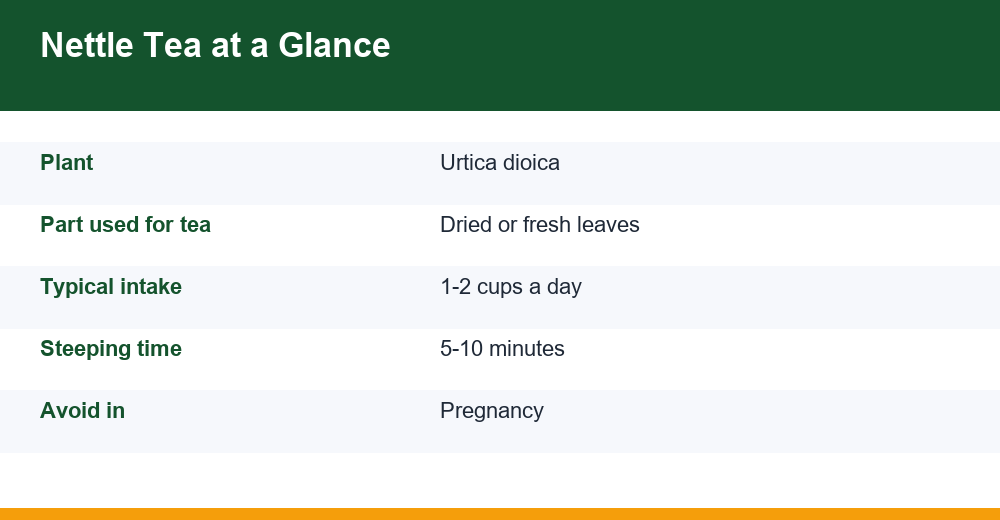
Nettle tea is an infusion made from stinging nettle (Urtica dioica), a hardy perennial that grows along field edges, riverbanks and neglected corners of gardens across Europe, Asia and North America. The fine hairs on its leaves and stems inject a mix of irritants when you brush against them, which explains the burning rash most of us remember from childhood.
Drying or cooking the leaves disarms those hairs. That is why a cup of nettle tea is comfortable to drink, and why nettles have been cooked as a spring green for generations. Raw, untreated leaves should not be eaten.
One detail matters a great deal when you read about nettle research: the plant part. Teas are almost always made from the leaf, while many supplements and clinical trials use concentrated root extract. The two contain different compounds and are studied for different purposes.
| Plant part | Common form | Main traditional or studied use |
|---|---|---|
| Leaf | Tea, soups, capsules | Seasonal allergies, joints, general tonic |
| Root | Standardized extracts | Urinary symptoms of an enlarged prostate |
| Seed | Tinctures, powders | Traditional tonic use; little research |
So when a website quotes a prostate study to promote nettle tea benefits, check whether the trial used root extract. Usually it did, and a home-brewed leaf infusion is not the same product.
Nettle Tea Benefits: What Research Actually Shows
So, what is nettle tea good for? The answer depends on whether you mean tradition or evidence. Herbal traditions credit nettle with dozens of uses. Scientific support is much thinner, and a lot of it comes from test-tube or animal work rather than human trials.
A 2022 review of nettle’s nutritional and pharmacological properties describes the leaves as a source of minerals, vitamins, pigments and polyphenols. Laboratory studies show antioxidant and anti-inflammatory activity, but lab activity does not automatically translate into a measurable effect from one or two cups a day.
| Traditional claim | What the evidence looks like | Honest rating |
|---|---|---|
| Hay fever relief | Small human trials; results mixed, placebo often similar | Uncertain |
| Joint and arthritis pain | Mostly small or older studies, some using topical leaf | Weak to modest |
| Prostate and urinary symptoms | Several trials, but mainly root extract, not tea | Moderate for root, not tea |
| Rich mineral source | Leaves contain minerals; amount in an infusion is small | Overstated for tea |
| Mild diuretic | Traditional use and animal studies | Plausible, mild |
| Blood sugar control | Limited human data | Insufficient |
The fair conclusion is that nettle is a pleasant, generally well tolerated herbal tea with a few plausible effects. It is not a proven treatment for any condition, and it should never replace medicine your doctor has prescribed.
Why lab results can mislead
Many headlines come from cell studies where concentrated extracts are applied directly to cells in a dish. Those experiments are useful for generating ideas, but your digestion, the dose in a cup and the way compounds are absorbed all change the picture.
Does Nettle Tea Help With Allergies?
Seasonal allergies are the most popular reason people reach for nettle. The idea is that nettle may calm the immune response behind sneezing, itchy eyes and a runny nose. Laboratory work has found that nettle extract can act on the histamine H1 receptor, one of the targets of conventional antihistamines.
Human trials are less convincing. A small 1990 study of freeze-dried nettle reported modest improvements, but it was brief and lacked strong controls. A later randomized, double-blind trial enrolled 74 adults with allergic rhinitis, of whom 40 completed it. They took either a 150 mg nettle root tablet or a placebo for one month, on top of standard antihistamine and saline treatment.
Symptom scores improved significantly in both groups, and nettle shifted only a few immune markers, so the authors called for larger, longer studies. You can read the full randomized trial on nettle and allergic rhinitis through the US National Library of Medicine.
- Evidence for nettle as an allergy remedy is mixed and small-scale.
- Most allergy trials used capsules or extracts, not tea.
- A warm cup may still feel soothing, but expect comfort rather than antihistamine-level relief.
- If you have asthma or severe allergies, keep your prescribed treatment in place.
If you want a stronger, more concentrated preparation for seasonal use, some herbalists prefer extracts. Our step-by-step herbal tincture recipe explains how tinctures differ from teas and why dosing them needs more care.
Joints, Minerals and Fluid Balance
Joints and inflammation
Of all the nettle tea benefits passed down in folk medicine, relief for aching joints is one of the oldest. Some people even applied fresh leaves to sore areas on purpose, a practice called urtication. A few small studies have looked at topical nettle and oral extracts for osteoarthritis pain, with some positive signals, but research remains insufficient to recommend nettle as an anti-inflammatory treatment.
Diet as a whole tends to matter more than any single herb. If joint comfort is your goal, nettle tea fits best alongside a varied eating pattern rich in vegetables, oily fish, legumes and olive oil. Our guide to anti-inflammatory foods covers the everyday choices with better research behind them.
Is nettle tea a good mineral source?
Fresh and dried nettle leaves do contain calcium, iron, potassium, magnesium and vitamin K, which is why nettle soup was valued as a spring tonic. However, an infusion extracts only part of what is in the leaf, and published figures for brewed tea vary widely. Treat any claim that a cup “covers” your daily iron or calcium as unsupported.
Eating cooked nettles, like spinach, delivers far more of the leaf’s nutrients than drinking the tea.
A mild diuretic effect
Nettle is traditionally considered a mild diuretic, meaning it may slightly increase urine output. That is part of its reputation as a cleansing spring tea. It is also the reason for caution if you already take water pills or medicines affected by fluid balance, covered later in this article.
How Much Nettle Tea Should You Drink a Day?
There is no official dose for nettle tea. Herbal references and practitioners generally suggest a modest range for healthy adults, starting low and increasing only if you feel well. If you drink it for gentle seasonal support, more is not better: the nettle tea benefits reported in studies did not come from large daily volumes.
| Situation | Approximate daily amount | Notes |
|---|---|---|
| First time trying it | 1 cup | Watch for stomach upset or rash |
| Regular healthy adult | 1-2 cups | A sensible everyday range |
| Short seasonal use | Up to 3 cups | Traditional upper range; take breaks |
| On medication or with a health condition | Ask a clinician first | Interactions are not fully studied |
One cup here means roughly 1 to 2 teaspoons of dried leaf in about 240 ml of just-boiled water. These figures are approximate, since commercial tea bags and loose blends vary in strength.
Is it OK to drink nettle tea every day?
For most healthy adults, a cup or two daily appears to be well tolerated. The NIH LiverTox database notes that liver injury has not been reported from stinging nettle extracts, and side effects in clinical trials were mild. Long-term studies of daily tea drinking are lacking, though, so many herbalists suggest cycling, for example a few weeks on and a week off.
- Drink plenty of plain water too, given the mild diuretic effect.
- Stop if you notice rash, swelling or digestive discomfort.
- Tell your doctor or pharmacist you drink it regularly.
How to Brew and Forage Nettles Safely
Brewing with dried leaf
- Add 1-2 teaspoons of dried nettle leaf to a cup or teapot.
- Pour over about 240 ml of freshly boiled water.
- Cover and steep for 5-10 minutes; longer makes a stronger, grassier cup.
- Strain and drink plain, or add lemon, mint or a little honey.
The flavour is earthy and spinach-like. It blends well with peppermint, lemon balm or rooibos. For more on ratios, steeping times and blending, see our guide on how to make herbal tea at home.
Brewing with fresh leaves
Using gloves, snip the top four to six leaves of young plants. Rinse them, place a loose handful in a pot and cover with boiling water. Steep 5-10 minutes. Fresh tea tastes lighter and greener than dried.
Foraging tips
- Harvest young tops in spring, before the plant flowers; foragers traditionally avoid older, flowering plants, whose leaves turn tough and gritty.
- Wear gloves and long sleeves; the sting is only neutralized by drying or heat.
- Pick away from roadsides, sprayed fields, dog-walking paths and polluted water.
- Be certain of identification; dead-nettles look similar but do not sting and are a different plant.
- Take only what you need and leave plenty for insects and wildlife.
To dry nettles, hang small bunches upside down in a warm, airy place out of direct sun, or spread leaves on a rack. Store fully dry, crumbly leaves in an airtight jar away from light and use within about a year.
Side Effects of Nettle Tea
Any list of nettle tea benefits should come with the downsides. The tea is generally well tolerated, and serious problems appear uncommon, but it is still a biologically active plant. Reported side effects, mostly from studies of supplements and extracts, include:
- Mild stomach upset, nausea, diarrhoea or constipation
- Headache
- Skin reactions such as hives or rash in sensitive people
- Increased urination, from the mild diuretic effect
- Allergic reactions, particularly in people allergic to nettle pollen
Touching fresh nettles causes the familiar stinging rash, which usually settles within a day. That is a contact reaction, not a side effect of the brewed tea.
Herbal products are not reviewed by regulators for effectiveness before sale in many countries, so quality can vary. Choose teas from reputable suppliers that list the plant part and country of origin on the label.
Who Should Not Drink Nettle Tea?
Nettle is not suitable for everyone. Interactions between nettle and medicines are not fully understood, so the cautions below are based on the plant’s known actions and standard herbal safety guidance.
| Group | Why caution is advised |
|---|---|
| Pregnant people | Traditionally thought to affect the uterus; commonly advised to avoid |
| Breastfeeding | Little safety data available |
| Children under 12 | Not well studied; avoid unless advised by a clinician |
| Diuretic (water pill) users | May add to fluid loss and affect electrolytes |
| Blood pressure medication users | May lower blood pressure further |
| Diabetes medication users | Possible effect on blood sugar; monitor closely |
| Warfarin users | Leaves contain vitamin K, which can affect clotting control |
| Lithium users | Diuretic effects may change lithium levels |
| Kidney or heart conditions | Fluid shifts may be unsafe; get advice first |
If you fall into any of these groups, speak to your doctor or pharmacist before you start drinking nettle tea regularly, and bring the product with you so they can see the ingredients. Stop drinking it at least two weeks before planned surgery unless your surgeon says otherwise, as is common advice for herbal products.
The Honest Bottom Line
The realistic list of nettle tea benefits is shorter than many blogs suggest. It is a caffeine-free, earthy herbal tea with a long traditional history, a mild diuretic action and some early, mixed evidence for allergy and joint comfort. The strongest clinical results belong to nettle root extracts for prostate symptoms, not to the leaf tea in your mug.
- Enjoy 1-2 cups a day as part of a balanced routine.
- Do not expect it to replace allergy, arthritis or blood pressure medicine.
- Skip it in pregnancy, and check with a clinician if you take regular medication.
- Forage young spring tops only from clean ground, with gloves.
Approached that way, nettle tea is a simple, seasonal ritual that connects you with one of the most common wild plants around, without the hype. This article is for general information and is not medical advice.
Frequently Asked Questions
What is nettle tea good for?
Traditionally, nettle tea is used for seasonal allergies, achy joints, as a mild diuretic and as a spring tonic. Human research is limited and mixed. The best clinical evidence concerns nettle root extract for prostate symptoms, not leaf tea. It is best viewed as a pleasant, caffeine-free herbal drink rather than a treatment for any condition.
How much nettle tea should I drink a day?
There is no official dose. For healthy adults, 1 to 2 cups a day is a sensible range, made with about 1 to 2 teaspoons of dried leaf per cup. Some herbalists allow up to 3 cups during short seasonal use. Start with one cup, take breaks, and ask a clinician first if you take medication.
What are the side effects of nettle tea?
Side effects appear uncommon and usually mild. They can include stomach upset, nausea, diarrhoea, constipation, headache, increased urination and skin reactions such as hives. Allergic reactions are possible, particularly in people sensitive to nettle pollen. Stop drinking it and seek advice if you notice swelling, rash or breathing difficulty.
Who should not drink nettle tea?
Pregnant people should avoid it, and breastfeeding people and children under 12 should only use it with medical advice. Extra caution applies if you take diuretics, blood pressure or diabetes medication, warfarin or lithium, or have kidney or heart problems. Talk to a doctor or pharmacist before drinking it regularly.