Learning how to make herbal tea at home is one of the simplest, most rewarding kitchen skills there is: with a handful of dried leaves or a few fresh sprigs, a kettle and five quiet minutes, you can brew a fragrant, caffeine-free cup for a fraction of the price of tea bags. This guide walks you through everything — the ratios, the water temperature, how long to steep, how to blend your own flavours and how to store it all — so every cup comes out balanced rather than bitter or watery.
Table of Contents
What Herbal Tea Actually Is
Strictly speaking, herbal “tea” is not tea at all. Real tea comes from the Camellia sinensis plant; herbal infusions, properly called tisanes, are made from anything else — leaves, flowers, roots, seeds or dried fruit steeped in hot water. That is why they are naturally caffeine-free and so varied in flavour.
Because there are no strict rules, making them at home is forgiving and creative. Once you understand a few basics about quantity, temperature and time, you can brew a single herb or invent your own blends with confidence.
A quick note before we start: this is a culinary and lifestyle guide, not medical advice. Some herbs can interact with medication or are best avoided in pregnancy, so if you plan to drink a herb regularly, check with a doctor or pharmacist first. For calming bedtime options, see our guide to herbal teas for sleep.
What You Need to Get Started
The beauty of a tisane is how little equipment it takes. You almost certainly have most of it already.
- A kettle or pot to heat water
- A mug, teapot or heatproof jug
- A tea infuser, strainer, or even a fine sieve
- Your chosen herbs — fresh or dried
- A lid or small saucer to cover the cup while it steeps
That last item matters more than people expect. Covering the cup traps the aromatic oils that would otherwise escape in the steam, and those oils carry much of the flavour and scent. A simple saucer over the mug is enough.
Fresh vs Dried Herbs and the Right Ratios
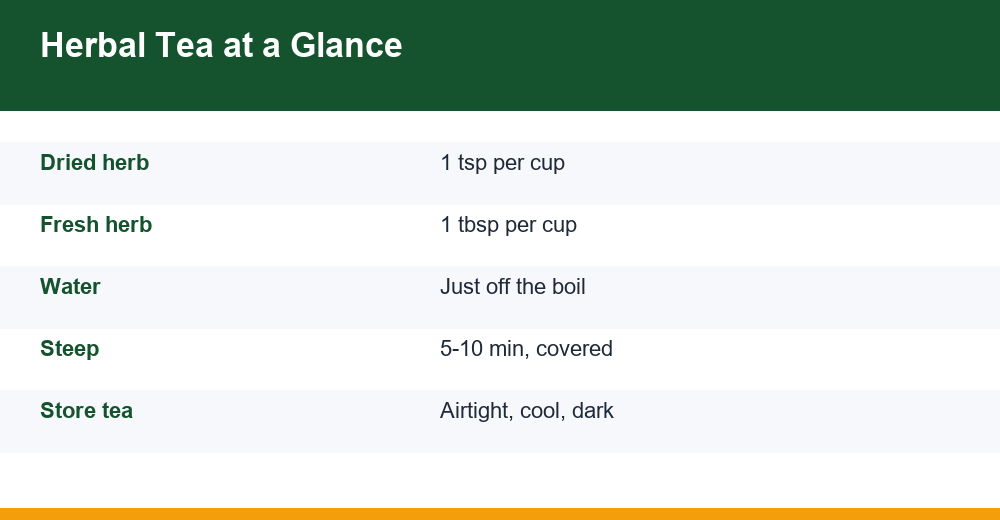
Both fresh and dried herbs make excellent tea; they simply need different amounts. Dried herbs are more concentrated, so you use less. As a reliable starting point:
| Herb type | Amount per cup (240 ml) | Notes |
|---|---|---|
| Dried leaves/flowers | 1 teaspoon | The everyday default |
| Fresh leaves/flowers | 1 tablespoon (lightly packed) | Roughly 3x the dried amount |
| Dried roots/bark/seeds | 1 teaspoon, crushed | Needs longer, hotter steeping |
| Fresh ginger/turmeric | 3-4 thin slices | Simmer for more punch |
These are guides, not laws. Taste as you go and adjust to your preference — a little more herb for a stronger cup, a little less if it turns bitter. Roots, bark and seeds are tougher than delicate leaves and flowers, so they release their flavour more slowly, as we will see in the steeping section.
How to Make Herbal Tea, Step by Step
Here is the core method. Once you have made a cup or two this way, it becomes second nature and you will rarely need to measure.
- Heat your water to just off the boil for leaves and flowers, or to a full boil for roots, bark and seeds.
- Add your herbs to an infuser, teapot or straight into the mug, using the ratios above.
- Pour the hot water over the herbs so they are fully submerged and can move freely.
- Cover and steep for the right time — usually 5 to 10 minutes (see the table below).
- Strain out the herbs, or lift out the infuser, so the tea does not turn bitter.
- Taste, then adjust with a little honey, lemon or a splash more hot water if you like.
That really is all there is to how to make herbal tea. The two things beginners most often get wrong are steeping loose herbs with no way to strain them, and walking away for twenty minutes — both easily fixed with an infuser and a timer.
Water Temperature and Steep Times
Time and temperature are where a good cup is won or lost. Delicate flowers bruise and turn bitter if the water is too hot or the steep too long, while tough roots need heat and patience to give up their flavour. Use this as your map:
| Herb | Water temp | Steep time |
|---|---|---|
| Chamomile, lavender (flowers) | 90-95 °C | 5 min |
| Peppermint, lemon balm (leaves) | 95 °C | 5-7 min |
| Hibiscus, rosehip | Boiling | 8-10 min |
| Ginger, turmeric (root) | Boiling / simmer | 10 min or simmer |
| Fennel, aniseed (seeds) | Boiling | 10 min, crushed |
| Rooibos | Boiling | 5-7 min |
If you are unsure, start at the lower end of the time range and taste. You can always steep a little longer, but you cannot un-steep an over-brewed, astringent cup. Keeping the lid on throughout keeps the temperature stable and the aroma in.
Blending Your Own Herbal Teas
Once single herbs feel familiar, blending is where it gets fun. A good blend usually has three roles: a base for body, an accent for character, and a touch of natural sweetness or brightness.
- Base: rooibos, chamomile or lemon balm — mild and rounded
- Accent: peppermint, ginger, lavender or fennel — use less, they are bold
- Lift: a little dried hibiscus, rosehip or lemon peel for brightness
Start with a ratio of about three parts base to one part accent, then adjust. Mix small test batches and write down what you use, so a blend you love can be repeated. Herbs traditionally chosen to unwind, such as those in our overview of adaptogens, are popular blend additions, though they are best introduced one at a time.
Cold-Brew and Sun Tea
Hot water is not the only way. Cold-brewing makes a smoother, less bitter infusion and is wonderful in summer. Simply add your herbs to cold water in a jug, cover, and refrigerate for 6 to 12 hours, then strain. Use a slightly more generous amount of herb, since cold water extracts more gently.
So-called “sun tea” brews in a sealed jar left in sunlight for a few hours. It is pleasant, but because the water never gets hot, keep it food-safe: use clean equipment, drink it the same day, and refrigerate promptly rather than leaving it out for long stretches.
Storing Herbs and Brewed Tea
Dried herbs keep best in airtight containers, away from light, heat and moisture — a cupboard, not the windowsill above the stove. Most dried leaves and flowers stay flavourful for about a year; roots and seeds a little longer. If a herb has lost its smell, it has lost most of its flavour too.
Brewed herbal tea is best enjoyed fresh, but you can refrigerate a batch in a covered jug and drink it within a day or two, hot or over ice. For a fuller reference on tisanes and the plants used in them, the encyclopaedic entry on herbal tea is a useful starting point.
Frequently Asked Questions
How much herb do I use to make herbal tea?
As a rule of thumb, use one teaspoon of dried herb or one tablespoon of fresh herb per cup (about 240 ml) of water. Adjust to taste — a little more for a stronger cup, a little less if it turns bitter.
How long should herbal tea steep?
Most leaves and flowers need 5-7 minutes, while tougher roots, bark, seeds and hibiscus need 8-10 minutes or a gentle simmer. Keep the cup covered while it steeps, and taste before straining.
Can I make herbal tea from fresh garden herbs?
Yes. Fresh mint, lemon balm, chamomile and lemon verbena all make lovely tea. Use about three times the amount you would use of the dried herb, and rinse them first. Only use herbs you are certain are edible and untreated.
Is herbal tea caffeine-free?
Most herbal teas (tisanes) are naturally caffeine-free because they are not made from the tea plant. The main exception is yerba mate. If you are avoiding caffeine, chamomile, peppermint, rooibos and lemon balm are all safe choices.