Building a zero waste home sounds like a huge undertaking, but in practice it is just a series of small, ordinary choices repeated over time. The goal is not a single jar of rubbish a year or a perfectly styled pantry; it is sending less to landfill, wasting less money, and leaning on things you can use again and again. This guide walks through twelve realistic swaps, room by room, so you can begin today without turning your life upside down.
Table of Contents
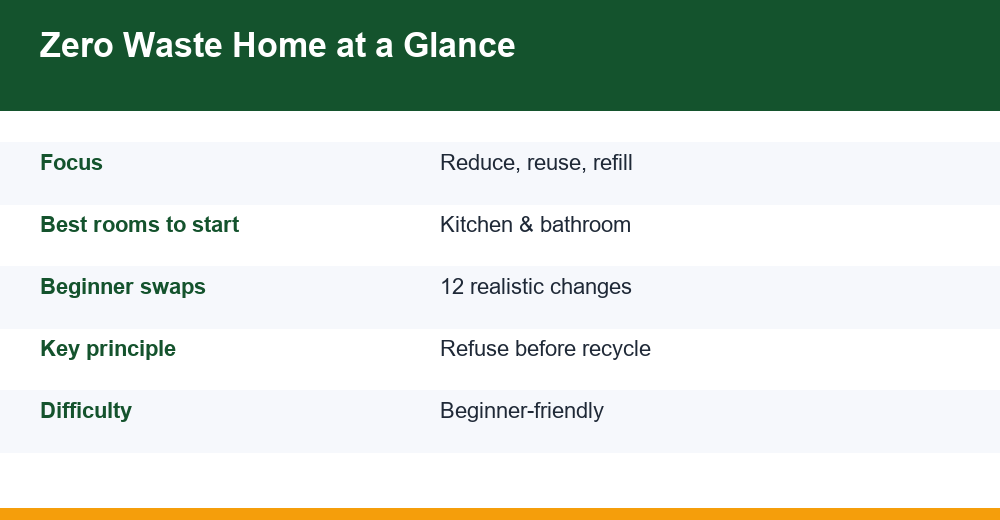
What a zero waste home really means
The phrase can feel like a finish line, and that image, one tiny jar of trash for the whole year, puts most people off before they even start. In everyday life the aim is far gentler: buy a little less, reuse a little more, and throw away as little as you reasonably can.
A useful mental model is the waste hierarchy, the order of priorities most environmental agencies recommend. It runs: refuse what you do not need, reduce what you do, reuse and repair where you can, and only then recycle. You can read more about the waste hierarchy and why recycling sits close to the bottom.
That order matters, because recycling has become the first thing many of us reach for. It is better than landfill, but recycling systems are imperfect and vary hugely by area. Creating nothing to recycle in the first place beats it every single time, and it usually costs less, too.
It also tends to make a home feel calmer. Fewer disposable products means fewer things to buy, store and clear away, and many people find the whole process quietly satisfying rather than restrictive.
Start where you are (before you buy anything)
Here is the part most swap lists skip: the greenest product is almost always the one you already own. It is tempting to fill an online basket with bamboo everything on day one, but binning perfectly usable plastic to replace it with new eco versions just creates more waste and spends money you did not need to spend.
A more relaxed route to a zero waste home is to use what you have first, then replace things thoughtfully as they wear out. Steady progress beats a dramatic overhaul that fizzles out by February.
For example, when your current roll of cling film runs out, that is the natural moment to try wax wraps or a set of lidded containers, rather than throwing away a half-used roll to make a point.
In practice, that looks like a few simple habits:
- Shop your own cupboards and drawers before buying anything new.
- Replace items only when they are actually worn out, not just because a greener version exists.
- When you do replace something, choose a durable, repairable version you will keep for years.
- Borrow, rent or buy second-hand for things you will only use occasionally.
- Refuse freebies, samples and single-use extras you know you will not use.
This mindset, often summed up as refuse, reduce, reuse, takes the pressure off getting everything perfect and saves money as a happy side effect.
Easy swaps for the kitchen
The kitchen and bathroom generate the bulk of most household waste, so they are the smartest places to focus first. Start in the kitchen, where a handful of durable reusables can replace hundreds of single-use items over a year.
The trick is to think in terms of habits, not gadgets. A reusable bottle only helps if you actually carry it, so keep your new swaps somewhere obvious until using them becomes automatic.
- Reusable bags: keep a couple of sturdy totes and a set of mesh produce bags by the door and in your everyday bag, so you are never caught out at the shop.
- Refill a stainless-steel water bottle and a travel mug instead of buying bottled drinks and disposable coffee cups.
- Wrap food in beeswax or vegan wax wraps and store leftovers in glass jars or tins rather than reaching for cling film.
- Swap paper towels for a stack of cloth napkins and washable dishcloths you can simply toss in the laundry.
- Buy pantry staples such as rice, oats, pasta and dried beans from bulk or refill sections using your own containers, where a shop is handy.
One honest caveat on bulk buying: it only saves waste if you actually use what you bring home, so start with staples you get through often. And a practical note on wax wraps, they are brilliant for bread, cheese and covering bowls, but not for raw meat or fish, and they last far longer washed in cool water.
Low-waste swaps for the bathroom
The bathroom is the other big waste hotspot, largely because so many products arrive in small plastic bottles that are fiddly or impossible to recycle. Happily, the swaps here are some of the easiest to live with day to day.
- Choose a bamboo toothbrush or a brush with replaceable heads, so you keep the handle and swap only the bristles.
- Try bar soap, plus shampoo and conditioner bars, or buy refill pouches for the products you already love.
- Switch disposable razors for a durable metal safety razor with inexpensive, recyclable blades.
- Keep a refillable pump for hand soap and top it up from a larger bulk bottle.
Refill shops and naked beauty aisles are becoming more common, letting you top up shampoo, conditioner and lotion into containers you already have. If there is not one near you, larger bottles and simple bars still cut a surprising amount of packaging.
Paring back your shelf often means gentler skin and fewer half-used bottles, too. If you are simplifying, our guide to building a calm natural skincare routine pairs nicely with a lower-waste bathroom.
A couple of safety notes: a safety razor has an exposed blade, so store it well out of reach of children, and introduce any new bar or product gradually in case your skin does not agree with it.
DIY cleaning and refillables
You really do not need a cupboard full of specialist sprays. A surprising amount of everyday cleaning can be handled with a few basics, decanted into bottles you refill again and again rather than rebuy.
A simple all-purpose spray is roughly equal parts white vinegar and water; bicarbonate of soda makes a gentle scrub for sinks, hobs and pans. For more recipes and sensible store-bought options, see our guide to natural cleaning products.
Warm water and a good cloth do more heavy lifting than most people expect, and washable microfibre or cotton cloths cut right down on disposable wipes. Save stronger, specialist products for the few jobs that truly need them.
Cleaning safety, in plain terms
- Never mix bleach with vinegar or bicarbonate of soda. The reaction can release chlorine gas, which is genuinely hazardous; bleach should only ever be diluted with water.
- Keep vinegar away from natural stone such as marble or granite, and from some metals, as the acid can etch or dull the surface.
- If you add essential oils for scent, use only a few drops, keep them well diluted, and store the bottles out of reach of children and pets.
- Take particular care with essential oils around cats, which cannot process some compounds well; check with a vet if you are unsure, and avoid them in pregnancy unless a qualified professional has advised otherwise.
The suggestions here are general guidance for a greener home, not medical advice. If you are pregnant, have a health condition, or react to a product, stop using it and speak to a pharmacist, GP or another qualified professional.
Cutting food waste and composting
Throwing away food wastes all the water, energy, land and packaging that went into producing it, which is why reducing it is one of the most powerful moves in any zero waste home. It is also one of the fastest ways to cut your grocery bill.
- Plan a rough menu before you shop, and always check what is already in the fridge and freezer first.
- Store food well: keep soft herbs in a jar of water, know which fruit and veg prefer the fridge, and keep leftovers visible so they are not forgotten.
- Cook or freeze food before it turns, and get comfortable with flexible use-it-up meals like soups, frittatas and stir-fries.
- Learn the difference between best before (about quality) and use by (about safety); trust your senses for the former, but respect use-by dates on higher-risk foods like meat, fish and dairy.
Your freezer is one of the best anti-waste tools you own. Bread, milk, cooked meals, herbs and gluts of fruit or veg all freeze well, buying you time when life gets busy.
For the scraps you truly cannot eat, a compost bin or a kitchen caddy for a council food-waste collection keeps them out of landfill, where food breaks down poorly and releases methane.
A quick rule of thumb for composting at home:
- Do compost: fruit and vegetable peelings, coffee grounds, tea leaves, crushed eggshells and garden clippings.
- Avoid at home: meat, fish, bones, dairy and oily cooked food, which attract pests and smell, unless you have a specialist composter designed for them.
Common mistakes (and how to avoid them)
Most people trip over the same few hurdles, and spotting them early makes the whole thing far easier. The biggest by far is treating it as all-or-nothing: one plastic-wrapped snack does not undo months of good habits, and guilt has never helped anyone stick with a new routine.
A handful of pitfalls come up again and again:
- Buying a full set of reusables in one go, then leaving half of them to gather dust in a drawer.
- Chasing a perfectly photogenic pantry instead of the changes that actually cut waste.
- Forgetting your bags, bottle or cup once and giving up, rather than simply trying again tomorrow.
- Assuming everything can be recycled, when kerbside rules differ from one council to the next.
- Measuring your bin against someone else’s highlight reel online instead of your own starting point.
A kinder way to think about a zero waste home is as a direction, not a destination. Progress is rarely a straight line, and the swaps that last are the ones that suit your real routine rather than an idealised version of it. Miss a week, notice it, and simply pick the habit back up.
Your room-by-room swaps at a glance
Here are the twelve swaps gathered in one place. You do not need to do them all this week; pick two or three that fit your routine, let them become second nature, then come back for more.
| # | Old habit | Simple swap | Good to know |
|---|---|---|---|
| 1 | Plastic carrier and produce bags | Reusable totes and mesh bags | Keep some by the door and in your bag |
| 2 | Bottled water and takeaway cups | Refillable bottle and travel mug | Your biggest daily-use win |
| 3 | Cling film | Wax wraps and glass jars | Not for raw meat; wash in cool water |
| 4 | Paper towels | Cloth napkins and dishcloths | Machine washable, last for years |
| 5 | Packaged pantry goods | Bulk or refill in your own jars | Best if a refill shop is nearby |
| 6 | Plastic toothbrush | Bamboo or replaceable-head brush | Keep the handle, swap the head |
| 7 | Bottled shampoo and shower gel | Bars or refill pouches | Try one product at a time |
| 8 | Disposable razors | Metal safety razor | Store blades away from children |
| 9 | Several spray cleaners | DIY vinegar and water spray | Never mix with bleach |
| 10 | New bottles each time | Refillable bottles or refill station | Label them clearly |
| 11 | Food thrown away | Meal planning and smart storage | Check the fridge before shopping |
| 12 | Scraps to landfill | Compost bin or council caddy | No meat, dairy or oily food |
If you are still not sure where to begin, this order tends to work well for most homes:
- Carry a reusable bag, bottle and cup, the swaps you will use almost every day.
- Tackle food waste with a little planning and a compost caddy.
- Replace kitchen and bathroom disposables gradually, as each one runs out.
- Try one or two DIY cleaners once your current sprays are empty.
A zero waste home is built one small habit at a time, never in a single weekend. Every swap that sticks is a permanent little reduction in what you buy and bin, and it is that steady, forgiving progress, rather than perfection, that really adds up over the years.
Frequently Asked Questions
What does zero waste actually mean at home?
It is an aspiration rather than a literal target. A zero waste home aims to send as little as possible to landfill by refusing, reducing and reusing first, and recycling last. Almost no household reaches a true zero, so steady, meaningful reduction is the realistic and worthwhile goal.
Which swap should I start with?
Begin with what you will use every day: a reusable bag, a water bottle and a travel coffee cup. They replace the most single-use items for the least effort. Once those feel automatic, add a compost caddy and tackle kitchen or bathroom disposables as they run out.
Is low-waste living more expensive?
It can cost more upfront if you buy lots of new reusables at once, but it usually saves money over time. Buying less, wasting less food and refilling staples all trim your spending. The cheapest approach is simply to use what you already own before replacing anything.
Are homemade cleaners safe to use?
Generally yes, when you keep them simple and store them safely. Vinegar and bicarbonate of soda handle most jobs. Never mix bleach with vinegar, avoid vinegar on natural stone, and keep essential oils diluted and away from pets and children. This is general guidance, not medical advice.