A good natural skincare routine doesn’t need ten products or a cabinet full of jars — it needs a few gentle steps you’ll actually repeat. This guide walks through eight simple, sensible steps built around cleansing, moisturizing and daily sun protection, using kinder ingredients and honest expectations. Think of it as care, not a cure: calm, consistent habits that let your skin do what it does best.
Table of Contents
What a Natural Skincare Routine Really Means
The phrase gets thrown around loosely, so let’s be clear about what we mean. A natural skincare routine is a simple daily habit — cleanse, moisturize and protect — that leans on gentle, plant-derived or minimally processed ingredients instead of long lists of harsh actives and heavy fragrance. It’s less about the label on the bottle and more about a calmer, pared-back approach your skin can tolerate day after day.
One honest caveat up front: natural does not automatically mean safe or gentle. Poison ivy is natural; so is citrus oil that can make skin react in sunlight. The goal isn’t to chase a perfect ‘clean’ label, but to choose kind, well-tolerated ingredients and to test them carefully before they become part of your day.
The good news is that skin doesn’t ask for much. A short, thoughtful regimen you keep up almost always beats an elaborate one you abandon after a couple of weeks.
There’s real freedom in keeping things minimal, too. Fewer products mean fewer possible irritants, a smaller bill, and far less guesswork when something does bother your skin. Rather than chasing every trend, you build a small set of basics that genuinely work — and you change only one thing at a time, so you can always tell what did what.
The Four Core Steps: Cleanse, Tone, Moisturize, Protect
Almost every effective regimen — natural or not — rests on the same short foundation. Master these four and you’ve done most of the work.
- Cleanse — Gently lift away dirt, sweat and sunscreen so nothing sits on your skin overnight. Once in the morning and once at night is plenty for most people.
- Tone — Optional. A simple, alcohol-free mist or hydrating tonic can add a little moisture and comfort, but skip it if it feels like a step you won’t keep.
- Moisturize — Seal in water and support the skin barrier. Apply while your skin is still slightly damp so it holds hydration better.
- Protect — Daily sunscreen is the single most protective habit for long-term skin health. There’s more on getting this right below.
Notice that toning is the only optional step here. If you’re short on time, money or patience, drop the extras long before you drop cleansing, moisturizing or sun protection.
Think of these four as the frame and everything else — serums, masks, facial oils — as optional decoration. Decoration is lovely when the frame is solid, but it can’t hold a routine together on its own. If a fancier product ever crowds out one of the basics, it has earned its place too cheaply.
8 Simple Steps for Your Everyday Routine
Here is a simple natural skincare routine you can adapt to your skin and your schedule. Start with the basics and add a step only once your skin feels comfortable.
- Cleanse gently in the morning with lukewarm water and a mild, fragrance-free cleanser — or just water if your skin runs dry or sensitive.
- Moisturize while your skin is still slightly damp to help lock in hydration.
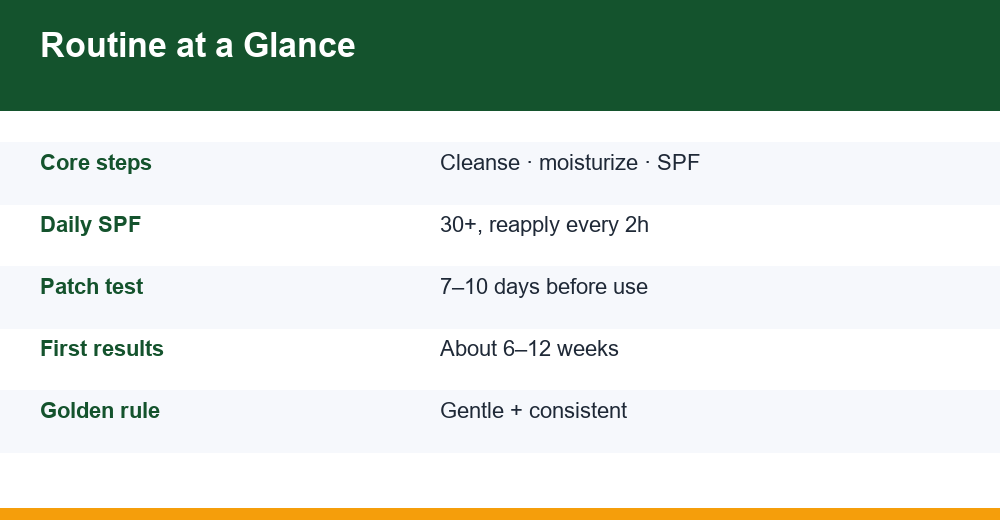
- Apply sunscreen every morning as your last step, SPF 30 or higher, even on cloudy days.
- At night, cleanse again to remove sunscreen, sweat and grime; add a second gentle cleanse if you wear makeup or heavier SPF.
- Use an optional hydrating tone or mist after cleansing, if your skin likes it.
- Treat sparingly — introduce one targeted product (such as a plant antioxidant) at a time, and only for a specific concern.
- Moisturize again at night, reaching for a richer balm or cream if your skin is dry.
- Patch test anything new and give the whole routine several weeks before you judge it.
That’s it — eight steps, most of them taking seconds. Short and repeatable is the whole point; a routine you follow daily beats a clever one you keep forgetting.
The Right Order to Apply Products
Order matters more than most people expect. As a rule of thumb, apply products from thinnest to thickest, so lighter, water-based formulas can sink in before richer creams and oils seal everything in. Sunscreen is the exception in the morning: it goes on last, over your moisturizer, as a protective top layer.
| Step | Morning | Evening |
|---|---|---|
| 1 | Gentle cleanse or water rinse | Cleanse to remove the day |
| 2 | Optional hydrating mist or tone | Optional hydrating mist or tone |
| 3 | Lightweight serum, if using | Targeted treatment, if using |
| 4 | Moisturizer | Richer moisturizer or balm |
| 5 | Sunscreen, SPF 30+ | — |
You don’t have to fill every row. Plenty of people are happy with cleanse, moisturize and sunscreen in the morning, then cleanse and moisturize at night — and nothing else. Treat the extra rows as options for the days your skin wants them, not boxes you’re obliged to tick each time.
Give each layer a moment to settle before the next, especially before sunscreen; a minute or two is usually enough. Rushing tends to leave products pilling or rolling off, which wastes both the product and the seconds you spent applying it.
Adjusting the Routine for Your Skin Type
The same eight steps flex to fit different skin, which is what keeps a natural skincare routine practical for real life. A few small adjustments make it feel personal rather than generic.
- Dry skin: skip foaming cleansers, moisturize morning and night, and add a richer balm or a facial oil through winter.
- Oily or combination skin: a light gel moisturizer and a lighter oil such as jojoba often feel more comfortable than heavy creams.
- Sensitive skin: the shorter the ingredient list, the better — introduce one new product at a time and lean on soothing options like oatmeal.
- Normal skin: you have the most freedom, but still prioritize cleansing, moisturizing and daily SPF over the extras.
- Mature skin: barrier support matters most, so richer moisturizers, gentle hydration and consistent daily SPF tend to help more than any single anti-aging claim.
- Acne-prone skin: keep products non-comedogenic and simple, stay gentle rather than aggressive, and see a professional for persistent or painful breakouts.
Skin also shifts with the seasons, hormones and age, so expect to tweak things now and then. That flexibility is a feature of a simple routine, not a flaw.
If you’re ever unsure of your skin type, notice how it feels a couple of hours after cleansing with nothing applied. Tight and rough usually points to dry skin; shiny across the forehead and nose suggests oily or combination; comfortable and even is closer to normal.
Gentle Natural Ingredients Worth Knowing
You don’t need anything exotic. A handful of well-tolerated, widely available ingredients covers most skin types. The table below is a general guide to traditional uses, not a promise of results — everyone’s skin is different, and evidence for individual botanicals is often limited or mixed.
| Ingredient | Traditionally used for | Good to know |
|---|---|---|
| Aloe vera | Soothing, light hydration | Choose high-percentage, low-additive gels |
| Colloidal oatmeal | Calming dry, itchy skin | Widely tolerated and fragrance-free |
| Jojoba or rosehip oil | Softening, added moisture | Jojoba tends to suit oilier skin |
| Shea butter | Rich, occlusive moisture | Best for dry or normal skin |
| Green tea, niacinamide | Antioxidant support | Introduce one at a time |
| Essential oils | Fragrance and ritual | Always dilute; skip if reactive |
Essential oils are popular in natural beauty, but they’re potent and a common cause of irritation. Always dilute them in a carrier oil, never apply them undiluted, and keep them off broken or inflamed skin. If you’re new to them, our guide to essential oils for beginners covers dilution and safe handling in more detail. Pregnant or breastfeeding readers, and anyone using them on children, should be especially cautious and check with a professional first.
When you’re choosing products, the ingredient list tells you more than the front of the bottle. Ingredients are listed roughly in order of quantity, so the first few matter most. Shorter lists are easier to judge, ‘fragrance’ or ‘parfum’ can stand in for many undisclosed compounds, and a plant on the label is no guarantee your skin will agree with it.
Patch Testing: The Step Most People Skip
New products let us down in two ways: they don’t do much, or they cause a reaction. Patch testing catches the second problem before it ever reaches your whole face.
Dermatologists generally suggest a patient approach here, because a reaction can be delayed. One quick dab genuinely isn’t enough to tell you a product is safe for everyday use.
- Apply a small amount to a discreet spot — the inner forearm or the crook of your elbow works well.
- Leave a rinse-off product on for the time you’d normally use it; leave a leave-on product in place.
- Repeat twice a day for 7 to 10 days, since a reaction may not appear straight away.
- Stop and wash the area at once if you notice redness, itching, burning or bumps.
If your skin stays calm across that window, it’s reasonable to fold the product into your regimen. If you react repeatedly and can’t pin down the trigger, a board-certified dermatologist can run a proper clinical patch test.
Be especially thorough with anything active or strongly scented — exfoliating acids, retinoids and concentrated essential-oil blends among them. If you have very reactive skin, a history of allergies, or a condition like eczema, extend the test and introduce new products one at a time, leaving a week or so between each.
What to Avoid (and Why ‘Natural’ Isn’t Always Gentle)
A short, gentle routine is partly about what you leave out. These are the habits most likely to irritate skin or simply waste your money.
- Over-cleansing and over-exfoliating, which strip the skin barrier and leave it tight, red or flaky.
- Heavy added fragrance, including some essential-oil blends, which is a frequent trigger for sensitive skin.
- Piling on several new products at once, so you can’t tell what helped or what caused a reaction.
- Chasing ‘detox’ or ‘cure’ claims — skin doesn’t detox through creams, and no product cures a medical skin condition.
- Citrus and some cold-pressed oils before sun exposure, as they can increase your skin’s sensitivity to light.
When in doubt, do less. Many problems people blame on ‘not using enough products’ are actually caused by too many — a barrier worn down by scrubbing, acids and constant experimenting. Give your skin a calm, unchanging routine for a few weeks and you’ll often see it settle down on its own.
It helps to think about fragrance and harsh ingredients across your whole home, not just your face. The same label-reading habit that steers you toward gentler natural cleaning products serves you well here: fewer ingredients, names you recognize, and nothing you already know irritates you.
Realistic Expectations and Seeing a Dermatologist
Consistency is the real secret. Most people see visible change somewhere between six and twelve weeks of steady use — not overnight, and rarely from a single hero product. Judge your routine over a couple of months, not a couple of days.
A simple way to stay honest with yourself is to take a plain, well-lit photo every few weeks rather than studying your face in the mirror each morning. Day to day, skin fluctuates with sleep, stress, diet and hormones, so small daily changes tell you very little. Trends over weeks tell you far more.
If you keep only one habit, make it sun protection. Daily SPF 30 or higher, applied generously and reapplied every couple of hours when you’re outdoors, does more for long-term skin health than any serum. For clear, non-commercial guidance, the NHS advice on sunscreen and sun safety is a reliable starting point.
Gentle, natural habits are a lifestyle choice, not a medical treatment. Persistent acne, eczema, rosacea, a rapidly changing mole, or any new or worsening skin problem deserves a qualified opinion. A dermatologist can diagnose what’s actually happening and recommend care that a routine alone can’t provide.
One final, plain-spoken note about any natural skincare routine: it can support healthy, comfortable skin, but it isn’t a cure for skin conditions. This article is general information, not medical advice — please consult a qualified professional for personal health concerns or serious symptoms.
Frequently Asked Questions
How long until a natural skincare routine shows results?
Give it time. Most people notice smoother, calmer skin after about six to twelve weeks of consistent use. Quick ‘overnight’ transformations are usually marketing. Judge how your skin feels over a couple of months rather than a couple of days.
Is natural skincare better than regular skincare?
Not automatically. ‘Natural’ describes where an ingredient comes from, not how gentle or effective it is — some botanicals irritate, and many synthetic ingredients are well tested and safe. What matters most is that a product suits your skin, is used consistently, and doesn’t cause a reaction.
Do I really need sunscreen if I use natural products?
Yes. Sunscreen is the most protective daily step for skin health, whatever else you use. Choose SPF 30 or higher, apply it generously as your last morning step, and reapply every couple of hours when you’re outdoors or swimming.
Can I use essential oils directly on my face?
It’s best not to apply them undiluted. Essential oils are concentrated and can irritate or sensitize skin, especially on the face. Dilute them well in a carrier oil, patch test first, and keep them off broken or inflamed skin. If pregnant or breastfeeding, check with a professional.