If you have ever cradled a warm mug on the sofa before bed, you already understand the quiet appeal of herbal teas for sleep. These caffeine-free infusions won’t switch you off like a pill, but the ritual, the warmth, and a handful of traditionally calming plants can gently signal to your body that the day is done. Below are eight blends worth trying, how to brew them well, and the honest safety notes it helps to know before you begin.
Table of Contents
Why Herbal Teas for Sleep Can Help You Wind Down
Sleep isn’t something you can force. It tends to arrive more easily when your nervous system feels safe and unhurried, and that is exactly the space a warm, caffeine-free drink helps create. The heat is soothing, the pause is deliberate, and many of the plants below have a long tradition of being used to ease tension at the close of the day.
There may be a simple physical cue at work too. Sipping something warm and then cooling down mirrors the small drop in core body temperature that naturally accompanies falling asleep. Nobody should overstate this, but it is a pleasant, low-effort nudge in the right direction, and it costs nothing to fold into your evening.
It also helps to stay clear-eyed about what a single cup can and can’t do. Most laboratory and clinical research on these plants uses concentrated extracts, not a mild infusion, and even then the findings are often limited or mixed. It is fairer to think of herbal teas for sleep as a gentle part of a wind-down routine than as a treatment for insomnia or any medical condition.
So why bother? Because the routine itself is genuinely useful. A predictable, screen-free ritual tells your brain that rest is on the way, and a comforting drink is an easy anchor for that habit, night after night.
- Creates a calming, screen-free ritual in the hour before bed
- Delivers gentle warmth that most people find naturally relaxing
- Contains no caffeine, so it won’t quietly work against you at night
- Draws on plants long associated in tradition with rest and calm
8 of the Best Calming Herbal Blends
Here are eight calming teas worth knowing, from familiar flowers to a few you may not have met. Each carries its own tradition, flavour and quirks, so treat this as a tasting list to explore at your own pace rather than a strict ranking.
1. Chamomile
The classic bedtime flower. Chamomile contains apigenin, a plant compound thought to interact with calming receptors in the brain, and it has one of the longest histories of use as a gentle evening drink. It is faintly apple-sweet and a sensible first tea to try. One caution: chamomile belongs to the same family as ragweed and daisies, so skip it if you react to those.
2. Valerian root
Valerian is one of the most studied sleep herbs, traditionally taken to shorten the time it takes to drift off. The evidence in people is genuinely mixed, and the aroma is famously earthy, yet many still find it helpful. It is best kept to short-term use and not combined with other sedatives.
3. Lemon balm
A member of the mint family with a soft, lemony scent, lemon balm (Melissa officinalis) is traditionally used to ease restlessness and the ordinary tension of a busy day. It pairs beautifully with chamomile or valerian and is one of the more pleasant-tasting calming herbs, which makes it easy to enjoy on a regular evening.
4. Passionflower
Passionflower (Passiflora incarnata) has a long folk history for nervous tension and a restless mind. It is often linked with GABA, the brain’s main calming messenger, though the direct evidence for sleep remains limited. The flavour is mild and grassy, and it blends nicely with sweeter herbs.
5. Lavender
Lavender is best known for aromatherapy, and most of its sleep research uses oral oil capsules rather than tea. Even so, its floral scent is deeply relaxing for many people, and a light lavender infusion makes a lovely evening ritual. Use only a small pinch, as too much quickly turns soapy and bitter.
6. Peppermint
Caffeine-free and settling for the stomach, peppermint is a smart choice if evening digestion tends to keep you awake. It is not a sedative, and a few people find mint refreshing rather than sleepy, so notice how your own body responds. It doubles nicely as an after-dinner cup, but skip it if you are prone to acid reflux.
7. Rooibos
This South African red bush tea is naturally caffeine-free and rich in antioxidants. Rooibos is not a sedative either, but its smooth, malty warmth makes it a comforting swap for regular black tea in the evening, without the stimulation that would otherwise keep you up. Its natural sweetness means you rarely need honey.
8. Linden (lime flower)
A traditional European wind-down infusion, linden or lime flower (Tilia) has a delicate honey-floral taste and a long history of use for restlessness and stress. It is a gentle, family-friendly option, though, as with every herb here, the direct evidence for sleep specifically remains limited.
| Herb | Traditionally used for | Good to know |
|---|---|---|
| Chamomile | Winding down, mild tension | Avoid with ragweed allergy |
| Valerian root | Falling asleep faster | Short-term use; strong smell |
| Lemon balm | Restlessness, tension | Pleasant, blends well |
| Passionflower | Nervous, busy mind | Mild, grassy flavour |
| Lavender | Relaxation, calm mood | Use sparingly; floral |
| Peppermint | Evening digestion | Not a sedative |
| Rooibos | Comforting bedtime swap | Caffeine-free, not sedating |
| Linden | Restlessness, stress | Gentle, delicate taste |
Do These Calming Teas Actually Work?
Here is the honest answer: the research is promising in places but far from settled. Chamomile and valerian have the most human study behind them, yet the results are inconsistent, and most trials rely on concentrated capsules or extracts rather than the gentle cup you would brew at home.
That doesn’t make a cup pointless. The warmth, the break from screens, and the repetition of a nightly routine are real relaxation cues, and for many people that ritual is where the benefit lies. Set your expectations at “this helps me unwind” rather than “this fixes my sleep,” and you are far more likely to feel a difference you can trust.
It is also worth giving any new habit a fair trial. Sleep varies naturally from one night to the next, so judge a tea over a couple of weeks rather than a single evening, and pay attention to how you feel rather than chasing a dramatic result.
Which Blend Should You Try First?
With eight options, it helps to start simple rather than buying the whole shelf. Most people do well beginning with one gentle, pleasant herb, drinking it for a week or two, and only then trying something new, so they can tell what actually suits them.
- New to herbal tea: start with chamomile or rooibos, both mild and forgiving
- A busy, racing mind: try lemon balm or passionflower
- Trouble drifting off: valerian is worth a short trial, earthy smell aside
- Evening digestion keeps you up: reach for peppermint
- You mainly want a soothing ritual: pick whichever flavour you love most
There is no prize for a complicated routine. A single herb you enjoy, brewed well and sipped at a consistent time, will almost always beat an elaborate blend you only tolerate.
How to Brew Herbal Teas for Sleep
Getting the most from a calming infusion comes down to patience and a lid. Covering the cup while it steeps traps the aromatic oils that would otherwise drift off in the steam, giving you more flavour and scent. For more on technique, our guide on how to make herbal tea walks through leaf-to-water ratios and steeping times.
- Use about one teaspoon of dried herb, or one tea bag, per cup of just-boiled water.
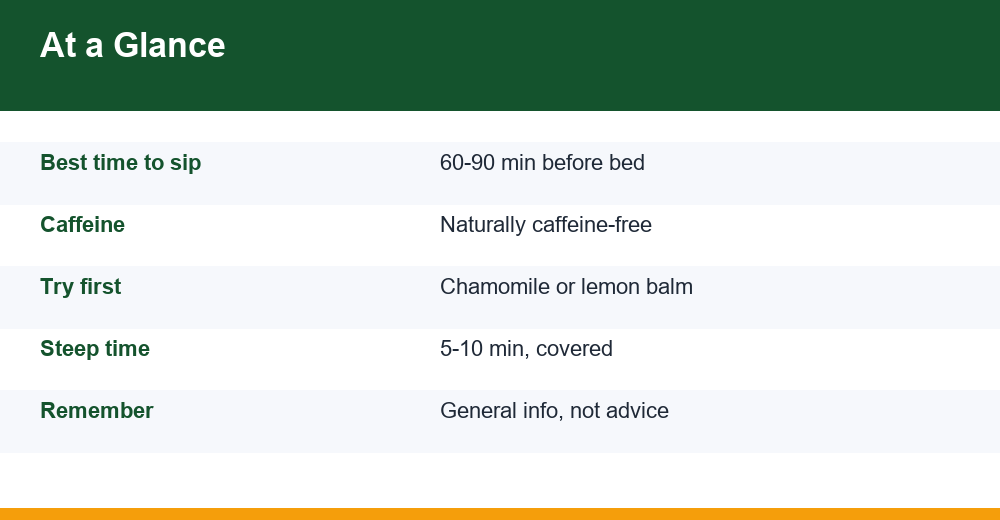
- Cover the cup and steep for 5 to 10 minutes; give tougher roots like valerian the longer end.
- Strain, then add a little honey if you like, though skip sweeteners close to bed if sugar tends to wake you.
- Sip slowly as part of dimming the lights and stepping away from screens.
Timing matters as much as the brew. The Sleep Foundation suggests a warm, caffeine-free drink around 60 to 90 minutes before bed, which also gives your bladder time to settle so a late cup doesn’t wake you at 3am. For most people, the sweet spot for herbal teas for sleep is that unhurried hour or so before turning in.
One more habit worth keeping: read the packet on shop-bought “bedtime” blends. Some mix truly caffeine-free herbs, while others slip in green tea or another stimulating ingredient, so a quick glance at the label can save a surprisingly wakeful night.
Safety, Interactions, and Sensible Cautions
Natural does not automatically mean risk-free, and herbs can be surprisingly active in the body. The single most useful step is simple: if you take regular medication or live with a health condition, check with your pharmacist or doctor before making any herb a nightly habit.
- Medication interactions: chamomile may add to the effect of blood thinners such as warfarin, while valerian, passionflower and lavender can amplify sedatives and other sleep or anxiety medicines.
- Allergies: chamomile and its botanical relatives can trigger reactions in people sensitive to ragweed, daisies or marigolds.
- Pregnancy and breastfeeding: the evidence is limited, so herbs such as valerian and passionflower are best avoided unless your midwife or doctor approves.
- Children: keep any infusion weak and only occasional, and ask a paediatrician before offering stronger herbs like valerian.
- Alcohol and driving: never pair strongly sedating herbs with alcohol, or use them before you need to drive.
This article is general information, not medical advice. A calming tea can be a genuinely lovely part of unwinding, but persistent insomnia, loud snoring, or waking unrefreshed night after night deserve a proper look from a qualified professional who can check for any underlying causes.
Beyond the Cup: A Calmer Wind-Down
A cup of tea works best as one cue among several. Sleep responds strongly to routine, so pairing your evening infusion with the same calming steps each night trains your body to expect rest at roughly the same time.
- Dim the lights and step away from bright screens about an hour before bed
- Keep the bedroom cool, dark and quiet
- Go to bed and wake at consistent times, even on weekends
- Save caffeine, alcohol and heavy meals for earlier in the day
Tea is really one thread in a much bigger picture. For more gentle, drug-free ideas, our roundup of natural sleep aids covers the habits, light and environment that quietly work alongside your evening brew.
Choosing and Storing Your Tea
Quality shapes both flavour and effect. Look for teas that clearly name the specific herb and sit well within their best-by date, since dried flowers and leaves slowly lose their aromatic oils, and with them much of their charm.
- Loose-leaf or whole-flower blends often taste fresher and stronger than dusty bags
- Choose reputable brands and read the label, as pre-made “sleep” blends vary a lot in what they actually contain
- Check blends for hidden green or black tea, which add the caffeine you are trying to avoid at night
- Store tea in an airtight tin, away from light, heat and strong-smelling spices
- Buy smaller amounts you will realistically finish within a few months
Above all, pick something you genuinely enjoy drinking. The tea you look forward to is the one you will reach for consistently, and that steady, unhurried habit is where a simple evening ritual quietly earns its place.
Frequently Asked Questions
Which herbal tea is best for sleep?
Chamomile is the most popular starting point, as it is gentle, widely available and has some of the most human research behind it. That said, “best” is personal. Some people prefer valerian for falling asleep or lemon balm for a quieter mind, so it is worth trying a few over a couple of weeks.
How long before bed should I drink sleep tea?
Aim for roughly 60 to 90 minutes before bed. That gives the warmth and the ritual time to help you unwind, and it lets your bladder settle so a late trip to the bathroom doesn’t end up interrupting the sleep you were hoping to protect.
Can I drink herbal tea for sleep every night?
For most healthy adults, a nightly cup of mild chamomile or lemon balm is generally fine. Stronger herbs such as valerian are better kept to short-term use. If you take medication, are pregnant, or have a health condition, check with your doctor before making it a habit.
Are herbal sleep teas safe during pregnancy?
The evidence is limited, so caution is wise. Some herbs, including valerian and passionflower, are usually avoided in pregnancy. Even gentler options like chamomile are best used in moderation, and it is always sensible to ask your midwife or doctor before drinking them regularly.