If stress has you reaching for the kettle, you are in good company: herbs for anxiety have been part of home wellness routines for centuries, from a bedtime cup of chamomile to a whiff of lavender before a big day. This guide walks through seven of the most traditionally calming options, what the evidence really shows, and how to use them thoughtfully. It is written for everyday calm, not as a substitute for care when worry runs deep.
Table of Contents
What Herbs Can — and Can’t — Do for Calm
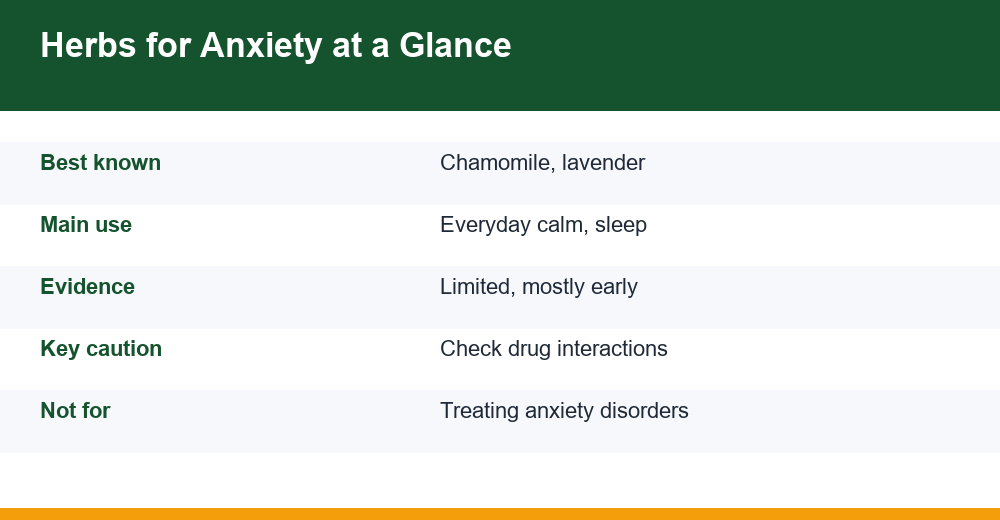
Let’s set expectations gently and honestly. A calming herb is a small, supportive ritual — a warm drink, a familiar scent, a deliberate pause in a busy day. Some of these plants have modest research behind them; many rest mostly on centuries of tradition. None of them is a cure, and none is a replacement for proper treatment when anxiety is severe or persistent.
Most herbs for anxiety fall into that supportive category rather than the medicine cabinet. They may help take the edge off ordinary, everyday stress — the pre-meeting jitters, the racing evening mind — without promising to fix deeper, lasting worry.
It also helps to remember that natural does not automatically mean safe. Plants contain real active compounds, they can interact with prescription medicines, and the quality of supplements varies widely between brands. Treating these herbs as gentle allies, rather than guaranteed fixes, keeps both your expectations and your safety in a sensible place.
Herbs for Anxiety: What the Science Actually Says
Research into calming plants is genuinely mixed, and it is only fair to say so. A handful have promising early studies; others rest almost entirely on generations of traditional use. Trials tend to be small, short, and hard to compare, because researchers use different doses, extracts and preparations.
A few examples give the flavour. Short-term chamomile has been linked to modest reductions in anxiety symptoms in some studies. A specific standardised lavender oil capsule has performed comparatively well in some trials for milder anxiety, while passionflower and lemon balm show early, tentative promise. Ashwagandha has some of the more encouraging — though still preliminary — evidence for stress and tension.
The fair takeaway is not discouragement but perspective. These are supportive habits with genuine tradition and some science behind them, not proven medicines. So when a label or an influencer promises that herbs for anxiety will banish worry for good, treat that as marketing rather than evidence, and keep your expectations kind and realistic.
7 Traditionally Calming Herbs to Know
Below are seven plants with long histories in calming traditions across the world — from European folk medicine to Ayurveda. Think of them as options to explore slowly and one at a time, rather than a shopping list to tackle all at once. Flavour, form and how your own body responds all matter.
1. Chamomile
Perhaps the most famous bedtime tea, chamomile has a soft, apple-like flavour and a long folk reputation for easing restlessness. Some short-term studies suggest it may ease mild anxiety symptoms, though the research is far from settled. It is most often enjoyed as a warm evening drink. Two cautions: avoid it if you are allergic to ragweed, and check with a pharmacist if you take blood-thinning medication, since large amounts may add to that effect.
2. Lavender
Lavender’s scent drifts through spas and linen drawers for a reason — many people find it truly grounding. Inhaled aromatherapy is best treated as a pleasant, calming ritual rather than a proven remedy. Interestingly, a standardised oral lavender oil preparation has shown more convincing results for milder anxiety in clinical trials. One firm rule: never swallow ordinary essential oil, and always dilute it before it touches your skin. A few drops in a diffuser is the simplest way to enjoy it.
3. Lemon balm
A lemony member of the mint family, lemon balm has been used since at least the Middle Ages to lift the spirits and calm frayed nerves. Small studies hint it may ease nervousness and support concentration, though they are early and modest. It has a bright, pleasant taste and blends beautifully with chamomile in a simple evening tea. If you already take sedatives, be aware it may add to their drowsy effect, so mention it to your pharmacist.
4. Passionflower
Passionflower carries a long, gentle reputation for quieting a busy mind and supporting restful sleep. Early research is cautiously encouraging, including small trials looking at situational nerves before stressful events. You will often find it in ready-made calming tea blends alongside other soothing herbs, which makes it easy to try. Because it can make you sleepy, it is better suited to the evening, and it is sensible to avoid mixing it with alcohol or other sedatives.
5. Ashwagandha
Used for centuries in Ayurvedic tradition, ashwagandha is an adaptogen — a plant traditionally taken to help the body weather stress. It has some of the more promising modern evidence for lowering stress and anxiety symptoms, although trials are still short and preparations differ. It is usually taken daily as a capsule or powder rather than as a quick fix. It can interact with thyroid medication and sedatives, and it is generally not recommended during pregnancy, so professional advice really matters here.
6. Valerian
Better known as a sleep herb, valerian root has a long tradition for easing tension and restlessness in the evening. The evidence is genuinely mixed, and its earthy aroma is not to everyone’s taste, but some people find it helpful as part of a wind-down routine. Because it can cause drowsiness, it is best kept for night-time and never combined with alcohol or sedative medicines. Start with a small amount and see how your body responds before making it a habit.
7. Holy basil (tulsi)
Revered in India as tulsi, holy basil is another adaptogenic herb traditionally brewed as a calming yet subtly uplifting daily tea. The modern research is still limited, so it belongs firmly in the traditional-use category, but it has a devoted following as a grounding ritual. As with any new herb, it is wise to introduce it slowly and pay attention to how you feel. If you are pregnant or taking medication, check with a professional before making it routine.
You do not need all seven. Most people settle on one or two that fit their taste and routine — a nightly chamomile, perhaps, or a diffuser of lavender on hectic days. Let curiosity, not pressure, guide which one you reach for first.
A Quick Comparison of Calming Herbs
Here is a simple side-by-side to help you get your bearings before you experiment. The evidence picture below is a rough, general snapshot rather than a medical rating, and it is worth remembering that every person responds a little differently.
| Herb | Traditional use | Common form | Keep in mind |
|---|---|---|---|
| Chamomile | Bedtime calm | Tea | Ragweed allergy; blood thinners |
| Lavender | Ease tension | Aroma, capsule | Don’t ingest raw oil |
| Lemon balm | Soothe nerves | Tea, tincture | May add to sedatives |
| Passionflower | Quiet the mind | Tea, capsule | Can cause drowsiness |
| Ashwagandha | Stress resilience | Capsule, powder | Avoid in pregnancy; thyroid |
| Valerian | Restful evenings | Tea, capsule | Drowsiness; avoid alcohol |
| Holy basil | Daily calm ritual | Tea | Evidence still limited |
Notice how often drowsiness and “ask a pharmacist” appear. That is your cue to introduce one herb at a time, keep amounts modest, and pay close attention to how you actually feel over the following days.
How to Choose a Calming Herb That Suits You
With seven options on the table, choosing can feel oddly stressful in itself. The reassuring news is that there is no wrong place to start — the herb that helps most is usually the one that fits your taste, your routine and your reason for reaching for it. A few simple questions can point you in a sensible direction.
- Want something for the evening? Chamomile, valerian and passionflower all lean naturally toward winding down and sleep.
- Prefer a scent to a drink? Lavender in a diffuser is the easiest, lowest-commitment way to begin.
- Looking for daily, longer-term support? Ashwagandha and holy basil are traditionally taken as part of a routine rather than in the moment.
- Put off by strong flavours? Lemon balm is bright and mild, and blends kindly with other herbs in a cup.
- On any regular medication? Let that guide you first, and check with a pharmacist before choosing — interactions matter far more than taste.
Whatever you pick, give it a fair and unhurried trial before you judge it. Try one herb for a week or two, pay attention to how you actually feel, and move on without any guilt if it is not for you. This is meant to be a small pleasure, not another task to get right.
Making Calming Herbs Part of a Ritual
Half the benefit of a calming herb is the pause it invites. Turning a cup of tea into a small ritual — something you do slowly and on purpose — is often where the real calm quietly comes from.
- Boil fresh water, then let it cool for a minute for delicate herbs like chamomile.
- Steep one to two teaspoons of dried herb for five to ten minutes.
- Cover the cup while it brews so the aromatic oils don’t escape.
- Sip somewhere comfortable, away from screens, and let yourself do nothing else.
You can blend gentle herbs — chamomile with a little lemon balm, say — for flavour and variety. If you prefer aromatherapy, add a few drops of properly diluted lavender to a diffuser instead. The aim is not perfection; it is a few unhurried minutes of slowing down.
Using Calming Herbs Safely
A little care goes a long way, and the good news is that most herbs for anxiety are gentle when treated with a bit of respect. Because these plants are genuinely active, a few simple habits keep them firmly in the supportive column rather than causing trouble.
- Check with your doctor or pharmacist first if you take any medication — especially blood thinners, sedatives, antidepressants or thyroid medicine.
- Introduce one herb at a time, so you can tell what is actually helping and spot anything that does not agree with you.
- Dilute essential oils properly for the skin (a common guide is around one drop per teaspoon of carrier oil) and never swallow them.
- Be extra cautious during pregnancy and breastfeeding, and with children, where evidence is often thin — ask a professional before using anything.
- Choose reputable, well-labelled brands, since supplements are not regulated as strictly as medicines and quality can vary a great deal.
One more important note: if a herb ever makes you feel worse, stop and check in with a healthcare professional. More is not better here — gentle and consistent almost always beats large or frequent doses.
Calm That Goes Beyond the Teacup
Herbs work best as one thread in a much bigger fabric of calm. A soothing cup of tea is lovely, but the habits woven around it usually matter more — steady sleep, regular movement, real connection, and a little time away from the screen.
If stress is a frequent visitor, it is worth building a wider toolkit. Simple, mostly free practices — slow breathing, a daily walk, a consistent wind-down routine — tend to do far more heavy lifting than any single plant. Our guide to reducing stress naturally is a good place to start, and calming herbs can sit comfortably alongside those habits rather than standing in for them.
Think of it as stacking small, kind choices. A short walk, a proper night’s sleep, a warm drink and a few slow breaths add up quietly. No single herb needs to carry the whole weight — and the calm you build will feel far less fragile when it does not have to.
When to Seek Professional Support
This is the most important part of the whole article, so please read it slowly. Herbs for anxiety are for everyday, mild stress and the ordinary ups and downs of life — they are not a treatment for an anxiety disorder, and reaching out for help is a sign of strength, never failure.
Please talk to a doctor if anxiety is interfering with your work, sleep, relationships or daily life; if it comes with panic attacks; or if it has quietly lingered for weeks. Effective support, including talking therapies, genuinely helps, and you deserve it. You can read more on the NHS page about getting help with anxiety.
Seek urgent help if you ever have thoughts of harming yourself, or symptoms that feel frightening or unsafe. And to be completely clear: this article is general information about traditional wellness, not medical advice. For anything to do with your health, a qualified professional who knows your history is always the right person to ask.
Frequently Asked Questions
What are the best herbs for anxiety?
There is no single best option. Chamomile, lavender, lemon balm, passionflower and ashwagandha are among the most traditionally popular calming herbs. Evidence is limited and varies from person to person, so it is wise to try one at a time and notice what genuinely suits you.
Can herbs replace medication for anxiety?
No. Calming herbs are gentle lifestyle supports for everyday stress, not treatments for anxiety disorders. If you take prescribed medication, please do not stop or replace it with herbs on your own. Speak to your doctor first, because some herbs can interact with common medicines.
How long do calming herbs take to work?
It varies. A cup of chamomile or the scent of lavender can feel soothing within minutes, largely as a calming ritual. Herbs like ashwagandha are usually taken daily and studied over several weeks. Give any new herb a fair chance, and stop if it does not agree with you.
Are calming herbs safe during pregnancy?
Be cautious. Evidence is often lacking, and several herbs are not recommended during pregnancy, breastfeeding, or for young children. Ashwagandha, for example, is generally advised against while pregnant. Always check with your midwife, doctor or pharmacist before using any herbal product during this time.