
Learning how to stay hydrated is one of the simplest, most rewarding habits you can build for everyday wellbeing. Water quietly powers almost everything your body does, yet most of us drink on autopilot and only notice a problem once a headache or afternoon slump arrives. This guide keeps things practical and honest: how much fluid you really need, how to read your own body, and the small routines that make good hydration feel effortless.
Table of Contents
Why Hydration Matters More Than You Think
Your body is largely made of water, and it draws on that supply for almost everything it does. Water helps regulate body temperature, cushions your joints, moves nutrients into your cells, supports digestion, and lets your kidneys flush out waste.
Because these jobs run quietly in the background, it is easy to forget how much they depend on fluid. Even a small shortfall can nudge your focus, mood and energy in the wrong direction long before you feel properly thirsty.
- Steadier energy and clearer thinking through the day
- More comfortable digestion and regularity
- Cushioned joints and supple, healthy-looking skin
- Reliable temperature control in heat or during exercise
Even mild dehydration, well before you feel truly thirsty, is commonly linked with dips in concentration, alertness and mood, and with tiring more quickly during exercise. You will not always notice it as thirst; often it shows up first as a vague mental fog or a shorter temper. Topping up steadily through the day is a low-effort way to keep both body and mind feeling their best.
It also helps to remember that you lose water constantly, through breathing, sweat and trips to the bathroom, even on a quiet day indoors. Replacing those losses gradually is the whole task, and it becomes very achievable once you build a light routine around it.
How to Stay Hydrated Every Day
The honest answer to how to stay hydrated is refreshingly ordinary: sip regularly, make water your default drink, and let your body’s signals fill in the details. You do not need a rigid formula to get this right.
Most people do best with a gentle daily rhythm rather than one big target. Spreading fluid across the day is kinder to your system than gulping large amounts all at once.
- Begin with a glass of water when you wake, before your first coffee.
- Keep a bottle within arm’s reach at your desk, in the car or in your bag.
- Drink a little with every meal and snack to build a natural pattern.
- Top up before, during and after exercise or time in the heat.
- Do a quick afternoon check-in, when many people quietly fall behind.
A helpful mindset is to aim for topped up, not overloaded. If you rarely feel thirsty and your urine is pale, you are almost certainly getting enough, with no counting required. The rest of this guide simply helps you fine-tune the amount, spot early warning signs, and make the habit stick.
How Much Fluid Do You Actually Need?
There is no single number that fits everyone, and any guide that promises one is oversimplifying. Your needs shift with your body size, activity level, climate, diet and overall health.
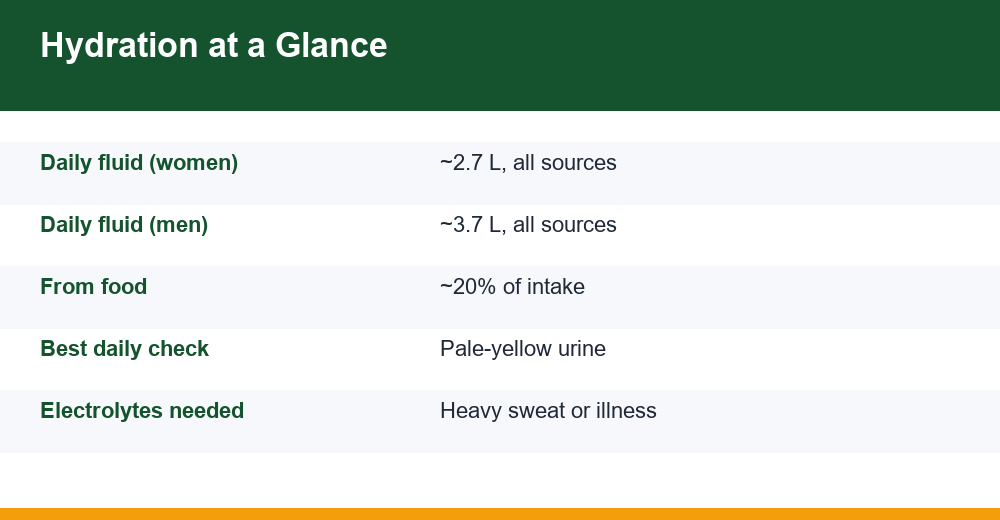
As a broad reference point, the Mayo Clinic cites roughly 2.7 litres of fluid a day for women and 3.7 litres for men from all sources combined, with about a fifth of that coming from food. The UK’s NHS keeps it simpler still, suggesting six to eight glasses or cups of fluid daily.
Notice that both figures count all fluids, not just plain water. Milk, tea, coffee, soups and water-rich foods all contribute to the total, which is why hitting your needs is easier than it sounds.
You have probably heard the eight glasses a day rule. It is a memorable starting point, but it was never a strict scientific law, and your true needs may sit above or below it depending on the day. Several everyday situations raise those needs, so it helps to plan ahead rather than play catch-up.
| Situation | Why needs rise | Simple adjustment |
|---|---|---|
| Hot weather | More fluid lost as sweat | Sip more often; carry a bottle |
| Exercise | Sweat and faster breathing | Drink before, during and after |
| Pregnancy or breastfeeding | Higher fluid demands | Add a few extra glasses |
| Fever, vomiting or diarrhoea | Rapid fluid and salt loss | Rehydrate steadily; seek advice |
| Dry or high-altitude air | More moisture lost breathing | Keep water close and sip |
If you would still like a rough personal starting point, try a glass on waking, one with each meal, and one or two in between, then add more on hot or active days. Treat any figure as a loose guide rather than a target to chase. Your thirst and the colour of your urine give you far better real-time feedback than any fixed number ever could.
One important caution: more is not always the goal. If you live with a heart or kidney condition, or take medication that affects fluid balance, your safe intake may be different. Follow the advice of your own clinician rather than a general chart.
Signs of Dehydration to Watch For
Your body gives clear feedback when it is running low, and reading those cues is a big part of how to stay hydrated with confidence. The most reliable everyday clue is your urine.
Pale straw-yellow usually means you are doing well. Dark yellow urine, and less of it than usual, is often the first honest sign that you need to top up.
Other mild signals tend to appear together:
- Thirst and a dry mouth or lips
- Tiredness, low energy or difficulty concentrating
- Headache or light dizziness
- Fewer trips to the bathroom than normal
It is worth checking in with yourself rather than waiting for a dramatic signal. A mid-afternoon headache, a dip in mood, or trouble concentrating can all trace back to mild dehydration, and a glass or two often settles them within the hour.
A simple habit is to glance at the colour each time you visit the bathroom; it takes a second and quietly keeps you honest. Keep in mind that some supplements, especially B vitamins, and foods like beetroot can temporarily change the colour, so read the overall pattern rather than a single reading.
Severe dehydration is different and needs prompt attention. Warning signs include sunken eyes, a rapid heartbeat or breathing, confusion, fainting, and passing very little or no urine.
Some groups need extra care. Older adults often feel thirst less keenly, so waiting to feel thirsty is not a reliable strategy for them. Babies and young children can become dehydrated quickly during illness. In these cases, or with any severe symptoms, treat it as a medical concern and seek help without delay.
Water-Rich Foods That Help You Hydrate
Drinking is only part of the picture. Around a fifth of most people’s fluid comes from food, and some fruits and vegetables are almost entirely water.
Building meals and snacks around these is an easy, enjoyable way to hydrate, and many of them overlap with the nutrient-dense picks in our superfoods guide.
| Food | Approx. water content |
|---|---|
| Cucumber | About 96% |
| Lettuce | About 95% |
| Celery | About 95% |
| Tomato | About 94% |
| Courgette (zucchini) | About 94% |
| Watermelon | About 92% |
| Strawberries | About 91% |
| Oranges | About 86% |
Cooked options count too. Broths, brothy soups, plain yogurt and porridge made with milk all add gentle fluid alongside real nourishment.
It is worth remembering that most drinks add to your total as well, not just plain water. Milk, herbal teas and diluted juice all count, while alcohol is the exception, since it nudges your body to lose more fluid than it provides. If plain water feels boring, a squeeze of citrus or a few slices of fruit can make it far more tempting to reach for.
There is a bonus here as well: water-rich foods usually arrive with fibre, vitamins and minerals, so you hydrate and nourish in the same bite. A practical habit is to add one such food to each meal, cucumber in a salad, tomato in a sandwich, or fruit with breakfast. It rarely feels like effort, yet it quietly adds up.
Electrolytes: When Water Isn’t Enough
Electrolytes are minerals such as sodium, potassium and magnesium that help your body balance fluid and keep muscles and nerves working. When you sweat heavily, you lose some of them along with water.
For everyday life, this is rarely a concern. A normal, varied diet plus plain water keeps most people’s electrolytes in a healthy range without any special products.
There is no need to buy anything special to keep these minerals topped up day to day. Everyday foods do the job well: bananas and potatoes supply potassium, nuts and leafy greens offer magnesium, and ordinary meals usually provide plenty of sodium, often more than enough already.
There are, however, times when replacing electrolytes genuinely helps:
- Long or intense exercise, especially lasting beyond an hour
- Hot, humid conditions where you are sweating a lot
- Illness with vomiting or diarrhoea, which drains salts quickly
How can you tell you have lost a lot of salt? Very salty-tasting sweat, cramping during long efforts, or feeling wiped out after heavy exercise are practical hints. In those moments a proper electrolyte drink can make a real difference.
For illness-related fluid loss, oral rehydration salts are usually a better choice than sugary sports drinks, and they are especially useful for children, so a pharmacist can point you to the right one. Everyday electrolyte powders are optional rather than essential, and many are high in added sugar or sodium, so it pays to read the label.
Simple Habits to Drink More Water
If you know you should drink more but keep forgetting, the fix is rarely willpower. It is design, small cues that make the healthy choice the easy one.
- Keep a filled bottle in plain sight; out of sight is out of mind
- Flavour water naturally with lemon, cucumber, mint or a few berries
- Pair a glass with things you already do, like every meal or each coffee
- Use a marked bottle so you can see your progress at a glance
- Set a gentle midday reminder if afternoons are your weak spot
This approach is often called habit stacking: you attach a new behaviour to one that already happens automatically. Because the trigger is already reliable, the new habit needs almost no memory or motivation to survive.
If you spend the day away from a tap, plan for it the night before by filling a bottle and leaving it by your keys or bag. Removing the friction of remembering tends to work far better than relying on motivation, which usually fades by mid-afternoon.
Anchoring the habit to your first waking minutes works especially well. Making a glass of water part of your morning routine for wellness means you start the day topped up rather than trying to catch up later.
These small anchors are the quiet answer to how to stay hydrated without constantly thinking about it. Once the cues are in place, the habit mostly runs itself.
Common Hydration Myths, Cleared Up
A few stubborn myths make hydration feel more complicated than it is. Here is what the evidence actually supports.
- You must drink exactly eight glasses a day. It is a handy reminder, not a medical rule, and all fluids plus water-rich foods count toward your total.
- Coffee and tea dehydrate you. Caffeine is only a mild diuretic, and for regular drinkers these still add to daily fluids.
- Feeling thirsty means you are dangerously behind. Thirst is a normal early cue to drink, not an alarm, so simply respond to it.
- More water is always better. Drinking very large amounts too fast can dilute blood sodium, causing headache, nausea or confusion, so spread intake out.
- Completely clear urine is the goal. Pale straw-yellow is ideal; water-clear can be a sign you are overdoing it.
The most reliable approach to how to stay hydrated is steady, moderate and tuned to your own body rather than any single rule. Drink to thirst, lean on water and water-rich foods, and adjust for heat, exercise and illness.
Finally, a gentle reminder: this article offers general information for healthy adults and is not medical advice. If you have a health condition, take regular medication, or notice persistent or severe symptoms, please speak with a qualified healthcare professional.
Frequently Asked Questions
How do I know if I’m drinking enough water?
The easiest daily check is your urine: pale straw-yellow usually means you’re well hydrated, while dark yellow suggests you need more. Thirst, energy levels and how often you visit the bathroom are useful clues too. Needs vary from person to person, so tune the amount to your own body.
Does coffee or tea count toward hydration?
Yes. Caffeine has only a mild diuretic effect, and for regular drinkers, tea and coffee still add to your daily fluids. Water is the best everyday choice, but your morning cup genuinely counts. If caffeine disrupts your sleep, simply switch to decaf or herbal options later in the day.
Can you drink too much water?
Rarely, but yes. Drinking very large amounts quickly can dilute the sodium in your blood, a condition called hyponatremia that causes headache, nausea and confusion. Your kidneys handle roughly a litre an hour, so spread fluids across the day rather than forcing several litres at once.
Do I need electrolyte drinks every day?
For most people, no. A normal diet plus plain water covers your electrolyte needs. They become genuinely useful during long or intense exercise, hot conditions, or illness with vomiting or diarrhoea. For sickness, oral rehydration salts are better than sugary sports drinks, so ask a pharmacist.