
A morning routine for wellness isn’t about waking at 5 a.m. or ticking off a rigid checklist – it’s a handful of small, repeatable habits that help you begin the day feeling steadier and more energized. The best routines are flexible enough to survive a bad night’s sleep, a busy household, or a shift that starts before dawn. This guide walks through ten habits worth building in, why they help, and how to make them stick without turning your morning into one more source of pressure.
Table of Contents
Why Your First Hour Sets the Tone
Your body runs on an internal 24-hour clock – the circadian rhythm – and the first hour after waking is when that clock takes many of its cues for the day. Light, movement, food, and even how quickly you reach for your phone all send signals that ripple into your energy, mood, and how well you sleep the following night.
Cortisol, often called the stress hormone though it’s really more of an alertness hormone, naturally rises in the morning to help you wake up. Flooding that moment with alarming headlines or a backlog of work emails can leave you feeling wired and behind before you’ve even stood up. A gentler start is one of the simplest ways to protect your baseline calm; if mornings tend to feel frantic, our guide to reducing stress naturally pairs well with the habits below.
None of this means your morning decides your fate. A rough start doesn’t ruin a day, and you can reset at any point. But stacking a few supportive habits early simply makes the rest of the day a little easier to steer – and, over time, a little kinder to your body.
What Makes a Morning Routine for Wellness Work
The most effective morning habits share three qualities: they’re consistent, they’re gentle, and they fit the life you actually live. A routine you can keep on a tired Tuesday in February matters far more than an elaborate one you abandon by the second week.
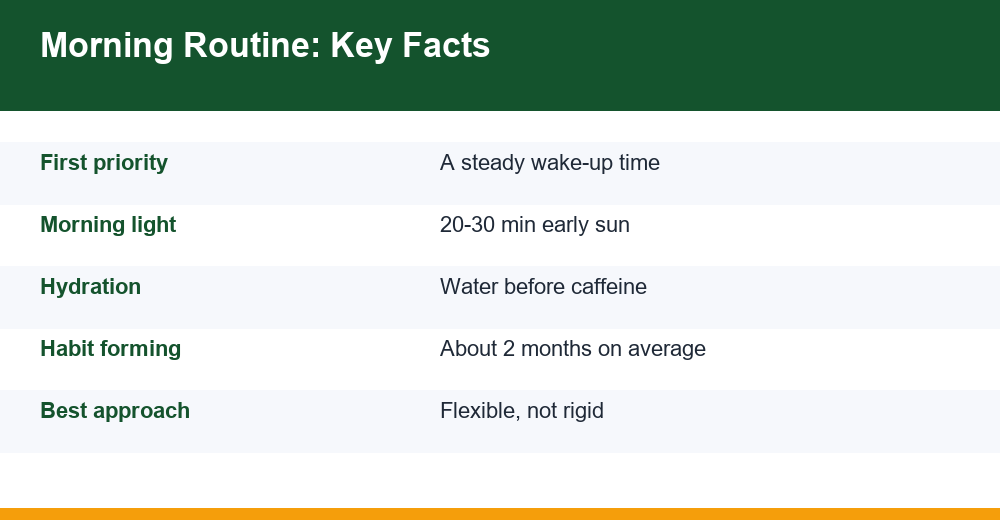
Consistency is the quietly powerful part. Research on sleep and circadian health keeps pointing to a steady wake-up time – even on weekends – as one of the most reliable ways to feel more alert in the morning and sleep better at night. Regular timing often does more than any single trendy add-on.
- Realistic: it works on your busiest, most tired days, not only your best ones.
- Flexible: you can shrink it to five minutes without guilt.
- Personal: it suits your chronotype – night owls and early birds have different needs.
- Additive: it leaves you feeling better, rather than adding another box to tick.
In other words, a sustainable morning routine for wellness is built from habits you’d genuinely miss, not ones you grimly endure. If a habit consistently makes your morning worse, it’s fair to drop it and try another.
10 Best Morning Habits That Genuinely Help
Here are ten habits that show up again and again in wellness and sleep research. You don’t need all ten – choose two or three that appeal, and let the rest come later if they earn their place.
| Habit | Why it may help | An easy first step |
|---|---|---|
| Wake at a steady time | Anchors your body clock; supports alertness and sleep | Set one alarm time for all seven days |
| Let natural light in | Helps set your circadian rhythm and lift morning mood | Open the curtains or step outside for a few minutes |
| Rehydrate first | Replaces fluid lost overnight; even mild dehydration dulls focus | Keep a glass of water by the bed |
| Move gently | Eases overnight stiffness and boosts alertness | Two minutes of stretching or a short walk |
| Keep a no-phone window | Protects attention and calm before the day rushes in | Delay the first scroll by 20-30 minutes |
| Breathe or sit mindfully | May help you feel calmer and more focused | Three slow breaths before you get up |
| Eat a nourishing breakfast | Steadies energy; protein and fibre keep you fuller | Add an egg, yoghurt, or nuts to your usual |
| Sip a warm drink mindfully | A calming ritual for a slower, more deliberate start | Make tea or coffee without multitasking |
| Set one intention | Gives the day a gentle sense of focus | Name a single priority for today |
| Add gratitude or connection | Supports mood and a feeling of being grounded | Note one good thing, or greet someone warmly |
Morning light is one of the best-supported habits on the list. Getting outdoor light – ideally within the first 30 to 60 minutes of waking, for roughly 20 to 30 minutes – helps your body clock recognize that the day has begun, which supports daytime alertness and better sleep later on. On dark winter mornings this is harder; even sitting by the brightest window helps, and some people find a daylight lamp useful. For more on how light shapes sleep, see the Sleep Foundation.
The idea that a glass of water “flushes out toxins” or kick-starts your metabolism is overstated. What’s clearer is that you lose fluid while you sleep, and even mild dehydration is linked with poorer concentration and a flatter mood. A glass of water is a small, low-cost way to start well – with lemon or without, it’s the fluid that matters, not any detox claim.
You also don’t need twenty minutes of formal meditation for the mindful part to count. A few slow breaths, a mindful cup of tea, or a short body scan all help you meet the day rather than lurch into it. If you’d like a little structure, explore some simple mindfulness practices you can fold into the time you already spend brushing your teeth or waiting for the kettle.
Breakfast isn’t compulsory, either. If you’re genuinely not hungry, most healthy adults don’t need to force food down – eat when your appetite arrives. When you do eat, a mix of protein, fibre, and some healthy fat tends to keep energy steadier than sugary cereal or pastries alone. If you manage diabetes or take medication that must be taken with food, follow your clinician’s guidance on timing.
A warm drink makes a lovely anchor for a slow start. Herbal teas such as chamomile, peppermint, or ginger are pleasant, traditional choices, but “natural” doesn’t mean risk-free: some herbs interact with medications, and not all are suitable during pregnancy or for young children. If you’re pregnant, breastfeeding, or taking regular medication, check specific herbs with a pharmacist. And if coffee is your ritual, that’s fine – many people simply feel better delaying it until after that first glass of water.
Build It Flexible, Not Rigid
The fastest way to abandon a routine is to make it too big. Instead of copying someone else’s 90-minute regimen, design a version that survives your real mornings – the sleepy ones, the rushed ones, the ones interrupted by a toddler at 6 a.m.
Here’s a gentle 15-to-20-minute sequence you can shorten on any given day:
- On waking, take a few slow breaths, then drink a glass of water.
- Open the curtains or step outside for light and a little fresh air.
- Move gently for a few minutes – stretch, walk, or potter about.
- Keep the phone aside and sip your drink without multitasking.
- Eat something nourishing if you’re hungry, and name one intention for the day.
Short on time? Keep only the first two steps. That is still a real morning routine for wellness – light and water alone make a strong foundation, and doing a little every day beats doing a lot occasionally.
Different lives need different shapes. A parent might weave light and movement into the school run; a night-shift worker can treat their “morning” as whenever they wake, applying the same principles at an unconventional hour. The pattern matters far more than the number on the clock.
A Good Morning Starts the Night Before
Here’s the part most morning guides skip: a calm start usually begins the evening before. If you wake feeling wrecked no matter what you do, the honest fix is often more sleep and a steadier bedtime, not a cleverer sunrise ritual. Dimming the lights and easing off screens in the last hour, then keeping your bed and wake times roughly consistent, shapes how you feel at 7 a.m. more than almost anything you can do after the alarm.
A few low-effort touches the night before quietly remove friction from your first ten minutes awake:
- Fill a glass of water and leave it by the bed.
- Lay out clothes or pack your bag, so those small decisions are already made.
- Charge your phone outside the bedroom, or at least across the room.
- Jot down tomorrow’s single priority so it isn’t rattling round your head at midnight.
- Protect a consistent bedtime that gives you a genuine shot at seven or more hours of sleep.
None of this has to be perfect. Even one small preparation – the water glass, say – makes the morning’s first habit almost automatic. Think of the evening as gently stacking the odds in your favour, so the tired version of you who wakes up tomorrow has fewer decisions to make and fewer reasons to skip the things that actually help.
How to Make New Morning Habits Stick
The popular claim that habits take 21 days is a myth. In one widely cited study, it took an average of about 66 days for a new behaviour to feel automatic – but the range ran from roughly 18 days to well over 200. The takeaway isn’t the exact figure; it’s that habits usually take longer than we expect, and that gentle consistency beats short bursts of intensity.
- Stack the new habit onto an existing one: drink water right after switching off your alarm.
- Start absurdly small – one stretch, one breath, one glass – and let it grow naturally.
- Make it obvious: leave the glass by the bed, lay out clothes, keep the curtains easy to reach.
- Expect to miss days. Missing once is normal; just pick it up again the next morning.
- Track lightly if it motivates you, but never let a broken streak talk you into quitting.
Above all, be patient and a little kind with yourself. A morning routine for wellness is a practice, not a performance, and the goal is to feel better – not to earn a flawless record. Some mornings will simply be about getting out the door, and that’s completely fine.
Safety, Honesty, and When to Ask a Professional
Most of these habits are gentle and low-risk for healthy adults, but a few honest caveats are worth keeping in mind before you dive in.
- Cold showers and cold-water dips are trendy but aren’t for everyone; if you have heart problems, high blood pressure, or are pregnant, check with a doctor first.
- Essential oils and aromatherapy need care – dilute before applying to skin, keep them away from children and pets, and stop if you notice any irritation.
- Herbal teas and supplements can interact with medications; “natural” is not the same as “safe for everyone.”
- New to exercise, or managing an injury or health condition? Build movement up slowly rather than all at once.
It’s also worth being honest about the evidence. Many wellness claims rest on small studies, tradition, or reasonable theory rather than firm proof, and the benefits are often modest. That doesn’t make these habits pointless – feeling calmer, better hydrated, and more rested is real and worthwhile – but be wary of anything that promises to cure or treat an illness.
Finally, this article is general information, not medical advice. If you have persistent fatigue, low mood, ongoing sleep problems, or any symptom that worries you – or before making significant changes alongside an existing health condition – speak with a qualified healthcare professional. A steady, realistic morning routine for wellness is a supportive habit, not a substitute for proper care.
Frequently Asked Questions
How long should a morning routine be?
There’s no ideal length. Even five to ten minutes of light, water, and a few calm breaths counts. A longer routine is fine if you enjoy it, but a short one you repeat daily beats an elaborate one you drop after a week. Consistency matters more than duration.
Do I have to wake up early to be healthy?
No. Waking early suits some people, but health depends far more on getting enough sleep and keeping a consistent wake time than on the hour itself. Night owls and shift workers can follow the same principles – light, hydration, gentle movement – whenever their day actually begins.
Is lemon water in the morning actually good for you?
Lemon water is a pleasant, hydrating drink, and hydration itself supports focus and energy. But claims that it detoxes the body or burns fat aren’t well supported by evidence. Enjoy it for the taste and the fluid – plain water works just as well if you prefer.
What if I keep skipping my routine?
Missing days is normal, not a failure. Habits often take a couple of months to feel automatic, with wide variation between people. Shrink the routine until it feels almost effortless, stack it onto something you already do daily, and simply restart the next morning.