Vagus nerve exercises are simple practices, such as slow breathing, humming or splashing cold water on your face, that aim to nudge your body toward its calmer “rest and digest” state. Some have reasonable research behind them, while others mostly have momentum on social media. This guide ranks seven popular techniques by the strength of their evidence, explains how to do each one, and says plainly what they can and cannot do.
Table of Contents
What the Vagus Nerve Does
The vagus nerve is the tenth cranial nerve. It runs from the brainstem down through the neck and into the chest and abdomen, with branches reaching the heart, lungs and much of the digestive tract. Its name comes from the Latin for “wandering”, which fits how far it travels.
It is the main nerve of the parasympathetic nervous system, the branch that slows the heart, supports digestion and helps the body recover after stress. Roughly four out of five of its fibres carry information from the body to the brain rather than the other way round. That two-way traffic is why breathing and body sensations can influence how calm or alert you feel.
Researchers usually can’t measure vagal activity directly in everyday settings. Instead, they use heart rate variability (HRV), the small beat-to-beat changes in heart rhythm. Certain HRV measures, such as RMSSD, are treated as a rough proxy for vagal influence on the heart. When you read that a practice “tones” the vagus nerve, it usually means it raised HRV, at least for a while.
HRV is a useful marker, but it is not a pure readout of the vagus nerve. It also shifts with age, fitness, sleep, hydration, caffeine, alcohol and illness, so a single number from a wearable says less than marketing suggests.
If you want the bigger picture of how the stress and relaxation systems interact, our guide to nervous system regulation covers the basics beyond this one nerve.
Do Vagus Nerve Exercises Actually Work?
The honest answer: some do, for some things, mostly in the short term. Vagus nerve exercises reliably produce measurable changes in the body, such as a slower heart rate or higher HRV during and shortly after practice. That is real physiology, not wishful thinking.
What the evidence does not show is that a few minutes of humming will “reset” anxiety, cure gut problems or reverse inflammation. Many of the bold claims online borrow from research on implanted or electrical vagus nerve stimulation, a medical treatment used for conditions such as certain types of epilepsy and treatment-resistant depression. A breathing drill is not the same intervention, and results from one don’t transfer automatically to the other.
A useful way to sort the claims:
- Well supported: slow, paced breathing shifts heart rhythm toward a calmer pattern and can lower perceived stress.
- Plausible, thinner evidence: humming, chanting, singing and gargling involve muscles and nerves linked to the vagus, but direct human data are limited.
- Real reflex, narrow use: cold water on the face triggers the dive reflex, which strongly slows the heart, but it is a brief jolt rather than a training method.
- Mostly speculative: claims that any single trick produces lasting “vagal tone” on its own.
None of this makes the practices pointless. A tool that calms you for twenty minutes before a hard conversation is useful. It just helps to know which tools have the firmest footing, and to be wary of anyone selling a programme that promises to fix a long list of unrelated problems.
How do I stimulate my vagus nerve naturally?
The most reliable natural route is your breath: slow it down and make the exhale longer than the inhale. After that come practices that tend to slow breathing anyway, such as meditation, gentle yoga, humming and singing. Background habits matter too. Regular aerobic activity and enough sleep are consistently linked with higher resting HRV, while heavy drinking and chronic sleep loss push it down.
7 Vagus Nerve Exercises Ranked by Evidence
The table below orders the seven most popular techniques from strongest to weakest support. The ratings are our editorial judgement based on the type and quantity of human research available, not a formal grading system.
| Rank | Technique | Evidence level | Main effect | Effect duration |
|---|---|---|---|---|
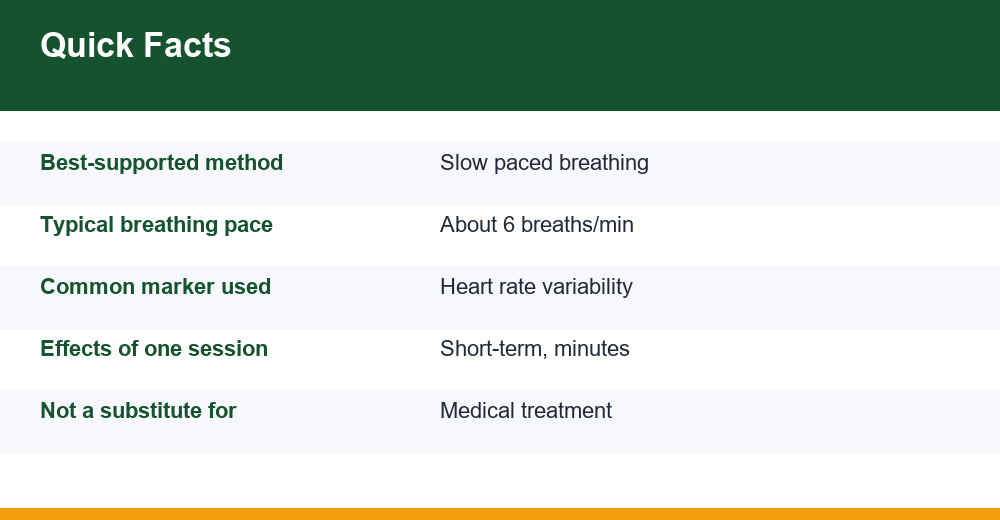
| 1 | Slow paced breathing (about 6 breaths/min) | Moderate to strong | Raises HRV, lowers heart rate | During and shortly after; builds with regular practice |
| 2 | Extended-exhale breathing / cyclic sighing | Moderate | Better mood, slower breathing rate | Short-term; a month of daily practice studied |
| 3 | Meditation and mindful breathing | Moderate (for stress) | Lower perceived stress | Builds over weeks |
| 4 | Gentle yoga with breath focus | Limited to moderate | Relaxation, flexibility | Short-term to weeks |
| 5 | Humming, chanting, singing | Limited | Slower breathing, possible HRV change | Short-term |
| 6 | Cold water on the face | Strong for the reflex, weak for calm | Sharp drop in heart rate | Seconds to minutes |
| 7 | Gargling | Very limited | Unclear; mostly theoretical | Unknown |
Notice the pattern: the techniques at the top all slow the breath. Many lower-ranked practices probably work partly because they also slow and lengthen breathing, which is a good argument for starting with breathing itself.
You do not need all seven. Pick one core practice from the top three and, if you enjoy them, add one or two lighter extras such as humming or a cool face splash.
Slow Paced Breathing: The Strongest Option
If you only try one technique, make it this one. Breathing at around six breaths per minute (roughly 0.1 Hz) lines up with natural rhythms in heart rate and blood pressure. At this pace the swings in heart rate between inhale and exhale get larger, which shows up as higher HRV.
This is one of the more consistent findings in the field. In a 2022 study, healthy participants did 30 minutes of deep breathing on one day and 30 minutes of ear-based electrical vagus nerve stimulation on another. All HRV measures rose after deep breathing, while the electrical stimulation changed only one; you can read the details in this study published on the NIH’s PubMed Central.
How to do it
- Sit or lie comfortably with one hand on your belly.
- Breathe in gently through your nose for about 4 seconds, letting the belly rise.
- Breathe out slowly through the nose or pursed lips for about 6 seconds.
- Repeat for 5 to 10 minutes. A timer or a simple pacing app helps you hold the rhythm.
- If you feel light-headed, breathe less deeply rather than faster.
The extended exhale and the physiological sigh
A close cousin is breathing with a longer exhale than inhale. The heart naturally speeds up a little on the in-breath and slows on the out-breath, so lengthening the exhale tends to feel calming. “Cyclic sighing” is a double inhale through the nose, the second topping up the lungs, followed by a long, slow exhale through the mouth.
In a Stanford-led randomised study published in 2023, about 100 healthy adults practised one of three breathing patterns or mindfulness meditation for five minutes a day over a month. All groups improved, but cyclic sighing produced the largest gain in positive mood and lowered resting breathing rate. No group showed a change in heart rate, a reminder that “feels calmer” and “measurably changed vagal tone” are not the same claim.
For more patterns, including box breathing and 4-7-8, see our collection of breathing exercises for stress.
Does Humming Stimulate the Vagus Nerve?
Possibly, but the case is weaker than social media suggests. The vagus nerve supplies muscles of the throat and voice box, so humming, chanting and singing do engage territory it serves. Humming also forces a long, controlled exhale, which on its own slows breathing toward that calming range.
Small studies of chanting and singing have reported shifts in HRV and in self-rated relaxation. Humming has also been shown to sharply raise nitric oxide levels in the nasal passages, which is interesting physiology but is not the same as proving vagal stimulation. The honest summary: it is pleasant, harmless and probably calming, largely because of the slow breathing it involves.
How to try humming or chanting
- Inhale through the nose for about 4 seconds.
- Hum on a comfortable low note for as long as the exhale lasts, feeling the vibration in your face and chest.
- Repeat for 3 to 5 minutes. Chanting “om” or singing along to slow music works similarly.
What about gargling?
Gargling appears in almost every list of vagus nerve exercises, yet direct evidence that it changes vagal activity in healthy adults is very thin. The idea rests on the fact that throat muscles are partly vagally controlled. Gargling water vigorously for 30 seconds a few times a day costs nothing, but treat claims about it as theory rather than established fact.
Is Cold Water Good for the Vagus Nerve?
Cold water on the face triggers the diving reflex, one of the most powerful vagal responses the body has. Sensors linked to the trigeminal nerve detect cold on the face, and the vagus nerve then slows the heart. Holding the breath at the same time strengthens the effect.
The reflex is so reliable that doctors sometimes use vagal manoeuvres, including cold water to the face, to try to stop certain episodes of abnormally fast heart rhythm. So yes, cold water activates the vagus nerve. Whether it leaves you calmer for long is a different question, and evidence for lasting stress relief is limited.
Face splash versus cold plunges
A cold face splash and a full-body ice bath are not the same thing. Plunging the whole body into very cold water first triggers a cold shock response: gasping, a racing heart and a spike in blood pressure. That is the opposite of calming in the first minute, and it carries real risks for people with heart conditions.
- Gentle option: splash cool or cold tap water on your face, or hold a cold, damp cloth over your eyes and cheeks for 15 to 30 seconds.
- Stronger option: briefly immerse your face in a bowl of cold water while holding your breath, only if you are healthy and comfortable doing so.
- Skip it: if you have a heart rhythm problem, heart disease or Raynaud’s, or have fainted before, unless a doctor has said it is safe.
What Is a Vagus Nerve Reset, and How Long Does It Take?
“Vagus nerve reset” is a social media phrase, not a medical term. It usually refers to a quick routine, often a mix of slow breathing, humming, neck stretches or a cold splash, meant to pull you out of a stressed state. The nerve doesn’t literally reset; what changes is the balance of signals between the calming and alerting branches of the nervous system.
It helps to separate three kinds of effect:
| Type of effect | What it looks like | Realistic timeframe |
|---|---|---|
| Acute (in the moment) | Slower heart rate, a sense of settling | Within minutes; fades over minutes to hours |
| Trained (over time) | Higher resting HRV, easier recovery from stress | Usually studied over several weeks of regular practice |
| Lifestyle-driven | Better baseline from sleep, fitness, less alcohol | Months; depends on overall habits |
There is no proven timeline for “toning” the vagus nerve. Breathing and HRV biofeedback programmes in research commonly run for several weeks, typically with daily practice of 10 to 20 minutes. Regular aerobic exercise and good sleep are linked with higher resting HRV too, and they likely matter more than any single trick.
Meditation fits here as well. It overlaps heavily with slow breathing and has a decent research base for reducing stress. If you have never tried it, our guide to meditation for beginners is a gentle place to start.
A simple 10-minute daily routine
- Five minutes of slow paced breathing at about six breaths per minute.
- Two minutes of humming on long exhales.
- Two minutes of a body scan, noticing tension in jaw, shoulders and belly.
- Optional: a cool face splash to finish, if it suits you.
Track how you feel, not just numbers. A wearable that reports HRV can be motivating, but single readings bounce around a lot with sleep, alcohol, illness and time of day. Look at weekly averages instead, and give any routine at least a month of consistent practice before judging it.
Safety Notes and When to See a Doctor
For most healthy adults, gentle vagus nerve exercises are low risk. A few cautions are worth knowing before you start.
- Light-headedness: breathing too deeply can cause dizziness or tingling. Slow down and breathe more shallowly.
- Heart conditions: techniques that strongly slow the heart, including cold-water face immersion and breath-holding, may not be suitable. Ask your doctor first.
- Fainting history: if you have had vasovagal fainting, avoid strong vagal manoeuvres unless advised otherwise.
- Pregnancy: gentle breathing is generally fine, but avoid long breath-holds and cold plunges without medical advice.
These practices are a complement to care, not a replacement for it. See a doctor if you have ongoing anxiety, palpitations, chest pain, fainting, unexplained digestive symptoms or low mood. Persistent symptoms deserve a proper assessment, whatever a viral video promises.
This article is for general information and is not medical advice.
Frequently Asked Questions
How do I stimulate my vagus nerve naturally?
The most reliable natural method is slow breathing at about six breaths per minute, with a longer exhale than inhale. Humming, chanting, meditation and gentle yoga add variety and likely work partly by slowing your breath. A cool splash of water on the face briefly triggers a strong vagal reflex. Regular exercise and good sleep support healthy heart rate variability over time.
Do vagus nerve exercises actually work?
They produce real, measurable short-term changes, such as a slower heart rate and higher heart rate variability during practice. Slow paced breathing has the best evidence. Claims that quick tricks permanently reset the nervous system or cure conditions are not supported. Think of these practices as useful calming tools that can build benefits with regular use, not as treatments.
How long does it take to tone the vagus nerve?
There is no established timeline. A single session of slow breathing can calm you within minutes, but the effect fades. Research on breathing and heart rate variability training usually runs over several weeks of daily practice, often 10 to 20 minutes a day. Lasting changes also depend on sleep, fitness, alcohol intake and overall stress levels.
Is cold water good for the vagus nerve?
Cold water on the face triggers the diving reflex, which activates the vagus nerve and slows the heart quickly. A face splash or cold cloth is a reasonable short-term calming trick for healthy people. Full-body cold plunges first cause a cold shock response and carry risks, so people with heart problems should check with a doctor first.