Nervous system regulation is your body’s ability to shift into a stress response when something demands it and then settle back down once the demand has passed. It is not about feeling calm all the time. This guide covers the basic biology, the signs that you are stuck in “on” mode, and a toolkit split into quick resets and daily habits, with each claim checked against the evidence.
Table of Contents
What Nervous System Regulation Really Means
“Regulate your nervous system” has gone from therapy offices to social media captions and supplement labels. Under the hype is a useful idea. Your body constantly adjusts heart rate, breathing, digestion, muscle tension and alertness to match what it thinks is going on around you. Most of this happens automatically, run by the autonomic nervous system.
In everyday wellness language, nervous system regulation means that these adjustments are flexible. You can gear up for a deadline, a hard conversation or a sprint for the bus, and later come back down to a resting state. Dysregulation is the reverse: you stay revved up long after the trigger is gone, or you drop into numbness and shutdown.
There is one point most popular articles skip. “Dysregulated nervous system” is not a medical diagnosis. It is a descriptive phrase used by therapists, coaches and wellness writers. That doesn’t make it useless, but it does mean you should be wary of anyone who sells a test, a supplement or a device that claims to measure or fix it.
A useful working definition is this: regulation is recovery capacity. The goal is not to avoid stress. The goal is to bounce back from it more reliably.
Fight-or-Flight vs Rest-and-Digest
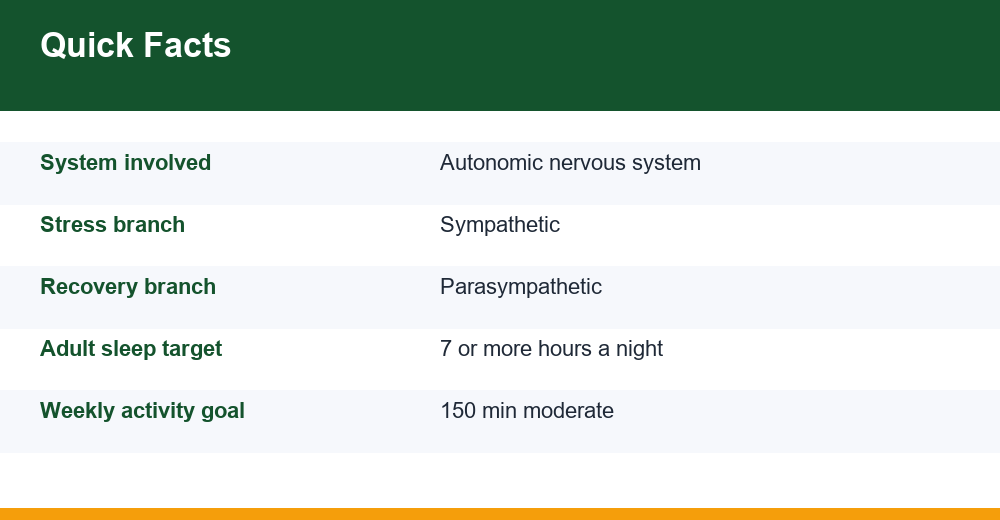
The autonomic nervous system has two main branches that work like an accelerator and a brake. Neither is “good” or “bad”. You need both, and health depends on moving smoothly between them.
| Feature | Sympathetic (fight-or-flight) | Parasympathetic (rest-and-digest) |
|---|---|---|
| Main job | Mobilize energy for action | Conserve energy, recover, repair |
| Heart rate | Speeds up | Slows down |
| Breathing | Faster, often shallow | Slower, deeper |
| Digestion | Slowed or paused | Active |
| Muscles | Tense, ready to move | Relaxed |
| Pupils | Dilate | Constrict |
| Typical feeling | Alert, on edge, driven | Settled, sleepy, safe |
The sympathetic branch, together with stress hormones such as adrenaline and cortisol, prepares you to act. It is the reason you can slam the brakes in traffic before you have consciously noticed the danger.
The parasympathetic branch handles the opposite set of jobs. The vagus nerve, which runs from the brainstem to the heart, lungs and gut, carries much of its signaling. That is why the vagus nerve features so heavily in calming advice.
Why the system gets “stuck”
The stress response evolved for short bursts. Modern stressors such as money worries, caregiving, constant notifications, poor sleep and long commutes tend to be chronic and low-grade. When the accelerator is pressed lightly all day and the brake rarely gets a turn, you end up with the familiar mix of tiredness and restlessness at the same time.
How Do You Know If Your Nervous System Is Dysregulated?
There is no blood test or scan for this. What people usually notice is a pattern: your reactions feel out of proportion to events, or recovery takes much longer than it used to. Common signs fall into two broad groups.
Signs of being stuck “on” (high arousal)
- Trouble falling asleep, or waking at 3 a.m. with a racing mind
- Jumpiness, irritability or snapping at small things
- Tight jaw, shoulders or chest, and shallow breathing
- Digestive upset during stressful stretches
- A feeling of urgency even when nothing is urgent
Signs of being stuck “off” (low arousal)
- Flatness, numbness or feeling disconnected from yourself
- Exhaustion that rest doesn’t seem to fix
- Brain fog and difficulty starting simple tasks
- Withdrawing from people you normally enjoy
Many people swing between both states, wired at night and drained by mid-afternoon. A simple self-check is to ask: after a stressful moment, how long until I feel like myself again? If the answer has stretched from minutes to days, your recovery capacity is probably overloaded.
An important caution: every symptom on these lists can also come from a medical problem, such as thyroid disorders, anemia, heart rhythm issues, sleep apnea or medication side effects. Self-observation is a starting point, not a substitute for a check-up.
The Fastest Ways to Calm Your Nervous System
These are the “in the moment” tools, things you can do in a minute or two when you notice your body revving up. None of them are magic, but several have reasonable research support for easing short-term physical arousal.
1. Slow your exhale
Breathing is the one autonomic function you can easily control on purpose. Slowing your breathing, and especially making the exhale longer than the inhale, is the most widely recommended quick reset. Try breathing in for about 4 counts and out for about 6 to 8, for two to five minutes. Our guide to breathing exercises for stress walks through box breathing, extended-exhale breathing and the double-inhale “sigh” step by step.
The cyclic sigh (two inhales through the nose, then a long, slow exhale) got attention after a 2023 Stanford-led trial. Five minutes of daily practice for a month produced bigger gains in positive mood than mindfulness meditation, and it lowered resting breathing rate. The trial involved about 100 mostly young, healthy adults, so treat it as promising rather than proven.
2. Move the stress energy
If you feel wired, sitting still can backfire. A brisk walk, climbing stairs or shaking out your arms and legs uses the energy the stress response has mobilized. Many people find that movement first and slow breathing second works better than breathing alone.
3. Orient to your surroundings
Slowly look around the room and name five things you can see. Feel your feet on the floor. This grounding technique is widely taught in trauma therapy and helps pull attention out of a looping thought and back into the present.
4. Use temperature
Splashing cool water on your face or holding something cold can trigger a brief slowing of the heart rate, a reflex linked to the vagus nerve. Gentle humming, slow neck stretches and gargling are other popular options covered in our vagus nerve exercises guide. The evidence for those last few is mostly theoretical, but they are low-risk.
| Quick tool | Time needed | Best when you feel | Evidence level |
|---|---|---|---|
| Extended-exhale breathing | 2-5 minutes | Anxious, tense | Moderate |
| Brisk walk or movement | 5-10 minutes | Wired, restless | Moderate |
| Grounding (5 things you see) | 1-2 minutes | Spiraling thoughts | Limited but plausible |
| Cold water on face | Under 1 minute | Panicky, overheated | Limited |
| Humming or gargling | 1-3 minutes | Mildly stressed | Mostly theoretical |
Daily Baseline: Habits, Food and Sleep
Quick tools help you through a bad moment. Your baseline, meaning the level of arousal you return to each day, is shaped by slower habits. This is where most lasting change happens, and it is the core of any honest approach to nervous system regulation.
Can you calm your nervous system naturally, without medication?
For everyday stress, often yes. The habits below are free, low-risk and backed by decent evidence. For diagnosed anxiety, depression or PTSD, though, medication and therapy can be essential, and lifestyle changes work alongside them rather than replacing them. Never stop a prescribed medicine without talking to your doctor.
Sleep comes first
Short or broken sleep makes the stress response more reactive the next day. The CDC advises adults to get at least 7 hours a night. Keeping a consistent wake time, getting morning daylight and dimming screens in the last hour before bed are simple, well-supported places to start.
Regular movement
Current US guidelines recommend at least 150 minutes of moderate activity a week, plus muscle-strengthening on 2 days. Exercise is a short, controlled stressor. Recovering from it repeatedly seems to train the body to bounce back from other stressors too. Walking counts.
What foods and habits support a calm nervous system?
No single food “calms the nervous system”, despite many marketing claims. What the evidence does support is less exciting: regular meals that avoid big blood-sugar swings, plenty of vegetables, fruit, whole grains, legumes and fish, and enough water. Habits matter as much as ingredients.
- Caffeine: it stimulates the stress response. If you are jittery or sleeping poorly, cut back or stop after noon.
- Alcohol: it may feel relaxing at first, but it fragments sleep and can increase anxiety the next day.
- Nicotine: it raises heart rate and blood pressure, even though people often use it to “calm down”.
- Time outdoors: time in green spaces is linked with lower self-reported stress in many studies, though causation is hard to prove.
- Screens and news: setting limits on doom-scrolling reduces a steady drip of low-level alarm.
Supplements such as magnesium, ashwagandha and L-theanine are heavily promoted for this purpose. The evidence is mixed, and they can interact with medications, so talk to a pharmacist or doctor before adding them. For a wider look at lifestyle strategies, see our guide on how to reduce stress naturally.
| Daily habit | Simple starting point | Why it helps |
|---|---|---|
| Consistent sleep | Same wake time 7 days a week | Stabilizes body clock and stress hormones |
| Movement | 20-30 minute walk most days | Builds stress recovery capacity |
| Daylight | 10 minutes outside each morning | Supports sleep-wake rhythm |
| Caffeine limit | None after midday | Reduces jitters and sleep disruption |
| Short breathing practice | 5 minutes, once a day | Makes the skill easier to use under stress |
| Social contact | One real conversation a day | Supports co-regulation and mood |
What Is Co-Regulation?
Co-regulation is the process of one person’s calm nervous system helping to settle another’s. It is how infants learn to manage distress: a caregiver’s steady voice, touch and facial expression help the baby’s body come down from crying. Over time, that outside support becomes an inner skill.
Adults co-regulate too. A friend who listens without rushing you, a hug from someone you trust, or even sitting quietly beside a calm person can ease physical tension. Animals count as well. Many people find that stroking a dog or cat steadies them.
- Reach out to someone you trust when you notice you are overwhelmed, before you hit your limit.
- Use a slower, lower voice when someone else is upset. Your tone affects theirs.
- Plan regular low-pressure time together, such as walks, meals or shared hobbies.
- Accept that some relationships are dysregulating. Distance from them is a valid strategy too.
The idea is often explained through polyvagal theory. That framework is popular in therapy, but some of its physiological claims are disputed by researchers. The core observation, that safe relationships help people calm down, holds up well with or without that theory, which is why social connection belongs in any plan for nervous system regulation.
How Long Does It Take to Regulate Your Nervous System?
It depends on what you mean. A single wave of stress usually peaks and starts to fade within minutes once the trigger is gone, and a few minutes of slow breathing can help that process along. That is regulation in the moment.
Shifting your baseline is slower. People who start sleeping better, moving regularly and practicing a daily calming technique often notice changes over several weeks. These are rough, approximate timelines and not guarantees. Recovery from long-term burnout, trauma or chronic illness can take months and usually goes better with professional support.
| Goal | Rough timeframe (approximate) | What helps most |
|---|---|---|
| Calm one stress spike | Seconds to minutes | Breathing, movement, grounding |
| Feel less reactive day to day | A few weeks | Sleep, exercise, daily practice |
| Recover from burnout | Months | Workload change, rest, support |
| Heal trauma-related patterns | Months to years | Trauma-informed therapy |
Progress is rarely a straight line. A stressful week can bring old patterns back. That is not failure, it is the system doing its job. What you are building is faster recovery, not immunity.
What the Evidence Supports and What It Doesn’t
Many top-ranking pages on nervous system regulation are selling an app, a course or a supplement. Here is a plain sorting of what holds up and what is mostly framing.
Reasonably well supported
- Slow breathing can produce a modest, short-term drop in blood pressure, though the studies vary in quality.
- Regular exercise and adequate sleep improve mood and stress resilience.
- Relaxation methods such as progressive muscle relaxation can reduce anxiety for some people.
- Social support is strongly linked with better mental and physical health.
Plausible but thinly studied
- Humming, gargling and similar “vagus nerve hacks”
- Cold plunges for anxiety (risky for people with heart conditions)
- Specific foods or supplements as nervous system “resets”
Overclaimed
- That you can “heal” a nervous system in a 7-day program
- That a wearable stress score diagnoses dysregulation
- That all chronic symptoms come from a dysregulated nervous system
The US National Center for Complementary and Integrative Health notes that relaxation practices are generally safe, but the evidence for specific health conditions is limited. It also advises against using them to replace or delay medical care. Its overview of relaxation techniques is a good, neutral reference.
When Self-Help Isn’t Enough
Self-care tools work best for everyday stress. They are not designed to treat anxiety disorders, depression, PTSD or physical illness on their own. Talk to a doctor or licensed mental health professional if any of the following apply.
- Symptoms last for weeks and affect work, relationships or sleep
- You have panic attacks, chest pain, fainting or a racing heart without a clear cause
- You are using alcohol or other substances to cope
- Past trauma keeps intruding through flashbacks, nightmares or constant alertness
- You have thoughts of harming yourself. Contact emergency services or a crisis line right away.
Therapies with solid evidence for these conditions include cognitive behavioral therapy and trauma-focused approaches. A good therapist can also teach regulation skills in a structured way that suits you. Seeking help is part of nervous system regulation, not a sign that the self-care failed.
This article is for general information only and is not medical advice.
Frequently Asked Questions
Can you regulate your nervous system naturally without medication?
For everyday stress, many people can. Slow breathing, regular exercise, steady sleep, time outdoors, less caffeine and supportive relationships all help the body recover from stress more easily. Medication still has an important role for diagnosed anxiety, depression and other conditions, so don’t stop or skip prescribed treatment without talking to your doctor.
What is the fastest way to calm your nervous system?
Slowing your breath is usually the quickest option. Breathe in for about four counts and out for six to eight, making the exhale longer, for a couple of minutes. If you feel too wired to sit still, take a brisk walk first, then breathe. Cool water on your face can also help in a pinch.
How long does nervous system regulation take?
A single stress spike can ease within minutes using breathing or movement. Lowering your day-to-day baseline usually takes several weeks of consistent sleep, exercise and practice. Recovery from burnout or trauma often takes months and goes better with professional support. These are approximate ranges, and everyone’s pace is different.
What is co-regulation in simple terms?
Co-regulation is when being around a calm, safe person helps your own body settle. It starts in infancy, when caregivers soothe babies, and continues throughout life. A trusted friend’s steady voice, a hug or quiet time with a pet can lower tension. It works alongside self-regulation skills, not in place of them.