Natural cleaning products let you keep a home fresh using simple pantry staples like white vinegar, baking soda and castile soap instead of a cupboard full of synthetic sprays. This guide walks through practical, tested recipes, the combinations you must never mix, and an honest look at what these homemade cleaners can and cannot do. Treat it as a calm starting point rather than a set of strict rules.
Table of Contents
Why Choose Natural Cleaning Products?
People reach for homemade cleaners for all sorts of reasons: fewer harsh fumes in the kitchen, less plastic under the sink, a lower monthly spend, and more say over what ends up on the surfaces they touch every day. None of that requires grand claims. For ordinary household dirt, a handful of pantry staples genuinely does the job, and it does it well.
The realistic picture is straightforward. Natural cleaning products shine at everyday tasks, such as wiping counters, cutting grease, lifting soap scum and freshening a room, while trailing behind commercial options when it comes to serious disinfection. Once you know where that line falls, you can build a routine that is gentle, affordable and still effective.
- Shorter ingredient lists you can actually read and recognise
- Less single-use plastic, because you refill the same bottles
- Lower running costs, since one jug of vinegar stretches a long way
- Fewer lingering chemical smells in small or poorly ventilated rooms
It is also worth being realistic about the health angle. Cutting down on strong synthetic fumes can make a stuffy room more pleasant, and some people with sensitivities notice the difference. That is comfort and preference, though, not a medical claim. Homemade cleaners are a lifestyle choice, and this guide treats them that way throughout.
For many households the appeal is simply calmer, less cluttered cleaning: a few familiar ingredients, refillable bottles, and no need to decode a long list of unpronounceable names. If that sounds good, the ingredients below are all you really need to begin.
The Five Ingredients That Do Almost Everything
Almost every recipe worth keeping comes back to the same short list. Learn what each ingredient actually does, and you can improvise instead of hunting for the perfect formula. Here is how the core five earn their place.
| Ingredient | What it does | Best for |
|---|---|---|
| White vinegar | Mild acid that cuts grease and mineral deposits | Glass, taps, kettle limescale |
| Baking soda | Gentle abrasive and deodoriser | Sinks, ovens, scrubbing, odours |
| Castile soap | Plant-oil soap that lifts dirt and grease | Floors, dishes, general washing |
| Lemon | Fresh scent with mild acidity | Chopping boards, freshening |
| Essential oils | Fragrance and personal preference | Scenting blends, used sparingly |
A few practical notes. Ordinary white vinegar (around five percent acidity) is the workhorse, and there is rarely any need for stronger “cleaning vinegar” at home. Baking soda is a mild abrasive and deodoriser, while its cousin washing soda is far more caustic, so handle that one with gloves and keep the two straight in your mind.
Lemon brings a fresh scent and a little natural acidity, which makes it pleasant for boards and freshening jobs, though it is milder and less consistent than vinegar. Castile soap, made from plant oils, is the gentle all-rounder for anything you would normally wash with soap and water.
Essential oils are the one optional item. They add scent rather than cleaning power, so a few drops per bottle is all you need. If you are new to them, our guide to essential oils for beginners explains how to choose and store them. Keep them well away from cats, which cannot process certain compounds, and out of reach of young children.
Between them, these five cover the vast majority of jobs. You are not really following recipes so much as combining an acid (vinegar or lemon), a mild abrasive (baking soda) and a soap (castile) as the task demands, which is why a little understanding beats memorising formulas.
Simple Recipes: All-Purpose, Glass, and Bathroom
A few ground rules first. Always patch-test a new blend on a small, hidden area, use clean bottles, and label everything clearly. Make small batches so nothing sits around losing its edge.
All-purpose surface spray
- Combine one cup of water with one cup of white vinegar in a spray bottle
- Add up to ten drops of essential oil if you would like a light scent
- Shake gently, label the bottle, then use on sealed counters, tiles and appliances
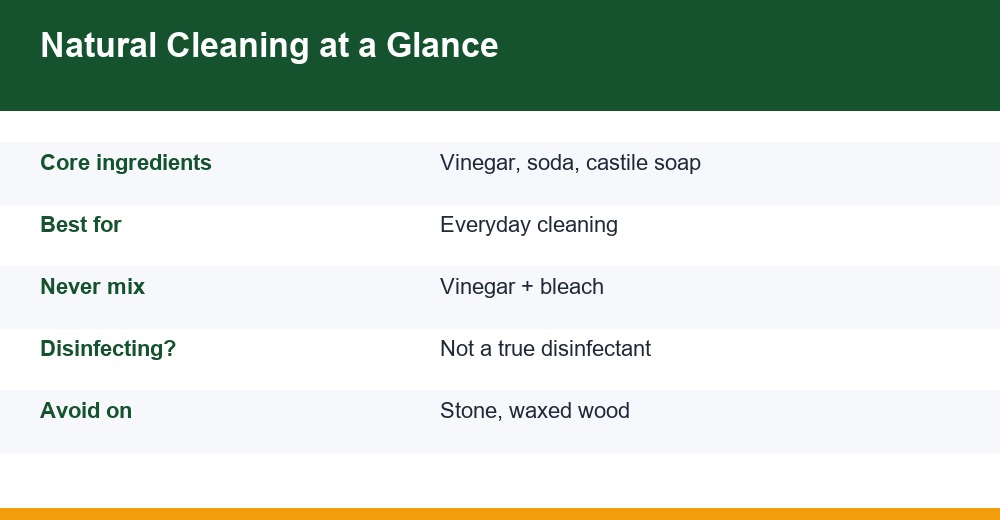
- Skip natural stone, waxed wood and unsealed grout, which acid can damage
Streak-free glass and mirror spray
- Mix two cups of water with a quarter cup of white vinegar
- Spray lightly and buff with a microfibre cloth or crumpled newspaper
- Clean on a cloudy day or out of direct sun so it does not dry too fast
Gentle bathroom scrub
- Sprinkle baking soda over the sink, bath or tiles
- Add a little castile soap to form a soft paste, then scrub with a damp cloth
- Rinse well; for limescale on taps, wrap them in a vinegar-soaked cloth for thirty minutes, then rinse
Simple floor cleaner (soap-based)
- Add a small squirt of castile soap to a bucket of warm water
- Mop as usual; most sealed floors need no rinsing afterwards
- Keep vinegar out of this one, as it cancels the soap and can harm stone or waxed finishes
One rule saves a lot of frustration: do not combine vinegar and castile soap in the same bottle. The acid and the soap cancel each other out and leave a curdled, oily film. Use soap-based cleaners for one set of jobs and vinegar for another, and they will both work as intended.
Baking soda also earns its keep beyond scrubbing. Left in an open jar it absorbs fridge and cupboard odours, and a spoonful sprinkled into a bin or down a slow drain, followed separately by hot water, helps keep smells in check between deeper cleans. The cloth matters too: a good microfibre cloth lifts far more grime than paper towel and can be washed and reused hundreds of times.
What You Should Never Mix
Because homemade blends feel gentle, it is tempting to assume anything goes. It does not. Combining certain everyday cleaners, including some marketed as green, can release truly dangerous gases within seconds, so this is the one area where caution is non-negotiable.
| Never mix | What can form | Why it is risky |
|---|---|---|
| Vinegar + bleach | Chlorine gas | Irritates eyes, throat and lungs; high levels can be fatal |
| Bleach + ammonia | Chloramine gas | Coughing, chest pain and breathing trouble |
| Bleach + rubbing alcohol | Chloroform | Toxic, irritating fumes |
| Hydrogen peroxide + vinegar (same bottle) | Peracetic acid | Corrosive to skin, eyes and lungs |
Mixing an acid such as vinegar with chlorine bleach produces chlorine gas, which is invisible and noticeable mainly by its sharp smell. If you ever combine cleaners by accident, leave the room, open windows for fresh air, and contact a poison control service straight away.
A few habits keep you safe. Only make one blend at a time, and never store a bleach-and-acid mixture. If you are switching from one product to another on the same surface, rinse thoroughly with water in between so the two never meet.
Two more habits are worth building. Open a window or run a fan when cleaning, especially in small bathrooms, and wear gloves if your skin is sensitive. Remember that “natural” does not mean harmless in concentrated form: undiluted essential oils can irritate skin and should never be applied neat.
Storing Your Homemade Cleaners Safely
Good storage keeps homemade cleaners working and everyone in the house safe. A little organisation here goes a long way.
- Reuse sturdy spray bottles and glass jars, washing them well before you refill
- Label every bottle with its contents and the date you made it
- Keep bottles out of direct sunlight and away from heat sources
- Store all cleaners, natural or not, out of reach of children and pets
Shelf life varies. Plain vinegar and baking soda solutions last a long time, while anything with fresh lemon juice or a soap-and-water base is best made in small batches and used within a couple of weeks, since it can spoil. Essential oils can slowly degrade some plastics, so glass bottles suit scented blends best.
If you reuse a bottle that once held a commercial product, wash it thoroughly and, ideally, keep it for a similar purpose. Store cleaning bottles apart from food and drinks so nothing is grabbed by mistake, and avoid unlabelled containers entirely.
Refilling the same bottles instead of buying new sprays is one of the simplest low-waste swaps to stick with. If you would like to go further, our zero-waste home guide has plenty more ideas for trimming everyday packaging.
Where Natural Cleaners Fall Short
It helps to be clear that cleaning and disinfecting are not the same thing. Cleaning lifts dirt, grease and most germs from a surface. Disinfecting is designed to kill a high, specific percentage of bacteria and viruses. Vinegar is a capable cleaner, but it is not a registered disinfectant and does not reliably kill viruses or tougher bacteria.
This is where honesty matters: natural cleaning products are cleaners first. For daily wiping, that is exactly what you want. But at certain moments, such as during illness in the house, after preparing raw meat, or cleaning up after a stomach bug, a registered disinfectant used as directed is the safer, more reliable choice.
When you do disinfect, method matters more than product. Clean the surface first to remove grime, apply the disinfectant, and, crucially, leave it wet for the full contact time on the label before wiping. Rushing this step is the most common reason disinfecting fails, natural product or not.
Vinegar’s acidity, so useful on limescale, is also its weakness on the wrong surface. Keep it away from:
- Natural stone such as marble and granite, which the acid can etch
- Waxed or oiled wood and some hardwood floor finishes
- Cast iron and certain coated pans
- Rubber seals and gaskets, which can perish with repeated acid contact
One last note on marketing. “Natural” and “eco” are not regulated terms, so a green label does not guarantee a gentle formula, and reading the ingredient list still pays off whether a product is shop-bought or homemade. If you have hard water, expect to lean on vinegar a little more for limescale, and to rinse to avoid streaks.
For most homes, the sensible balance is simple: gentle homemade cleaners for everyday jobs, plus an occasional targeted disinfectant where it truly matters. Be wary, too, of bigger claims. Evidence that essential oils “purify” the air, for instance, is limited and mixed, so treat scent as scent rather than a health benefit.
A Realistic Way to Get Started
You do not need to overhaul the whole cupboard in a weekend. The easiest way to start is to replace products one at a time as they run out, keeping what works and quietly dropping what does not.
- One large bottle of white vinegar
- A box of baking soda
- A bottle of liquid castile soap
- Two or three refillable spray bottles and a few microfibre cloths
- Optional: one or two essential oils whose scent you enjoy
Give yourself a realistic first week. Start with the all-purpose spray and the bathroom scrub, since those cover most daily cleaning, then add glass or floor recipes once the basics feel natural. Small wins build the habit far better than a dramatic clear-out.
A few sensible cautions apply. If you are pregnant, have babies or young children, keep pets (cats especially), or anyone at home has asthma, go easy on essential oils and keep rooms well ventilated. When in doubt, plain vinegar, baking soda and water handle most jobs with no added fragrance at all.
Finally, treat this as general lifestyle information rather than medical advice. The ingredients here are described for everyday household and traditional use, not as treatments for any condition. If you have a specific sensitivity, a health concern, or serious symptoms after any chemical exposure, speak to a qualified professional or a poison control service. Used thoughtfully, natural cleaning products can be a calm, low-cost and lower-waste part of daily life.
Frequently Asked Questions
Are natural cleaning products as effective as commercial ones?
For everyday dirt, grease and grime, natural cleaning products work very well and cost less. Where they fall short is disinfection: vinegar and baking soda clean surfaces but do not reliably kill viruses or tough bacteria. For that, use a registered disinfectant as directed.
Can I mix vinegar and baking soda for cleaning?
You can, but timing matters. When combined, they fizz and largely neutralise each other, leaving salty water. The foaming can help loosen debris in a drain, yet as a stored spray the mix loses much of its power. Use them separately for most jobs.
Are essential oils safe to use in homemade cleaners?
In small amounts they add scent, not cleaning power, so a few drops per bottle is enough. Take care around cats, which cannot process some compounds, and keep them away from young children. If you are pregnant or unsure, skip them or ask a professional first.
What should I never mix when making natural cleaners?
Never combine bleach with vinegar, ammonia or rubbing alcohol, as these release toxic gases such as chlorine or chloramine. Do not mix hydrogen peroxide and vinegar in one bottle either. If you switch products, rinse the surface with water first, and only make one blend at a time.