You have seen the word superfoods on smoothie bowls, cereal boxes and pricey powders, usually with a bold promise attached. The honest version is calmer: some everyday foods really are wonderfully nutrient-dense, yet no single ingredient can rescue an otherwise shaky diet. This guide walks through 15 genuinely nutritious foods, what makes each one worth eating, and how to enjoy them without the hype or the inflated price tag.
Table of Contents
What Superfoods Really Are
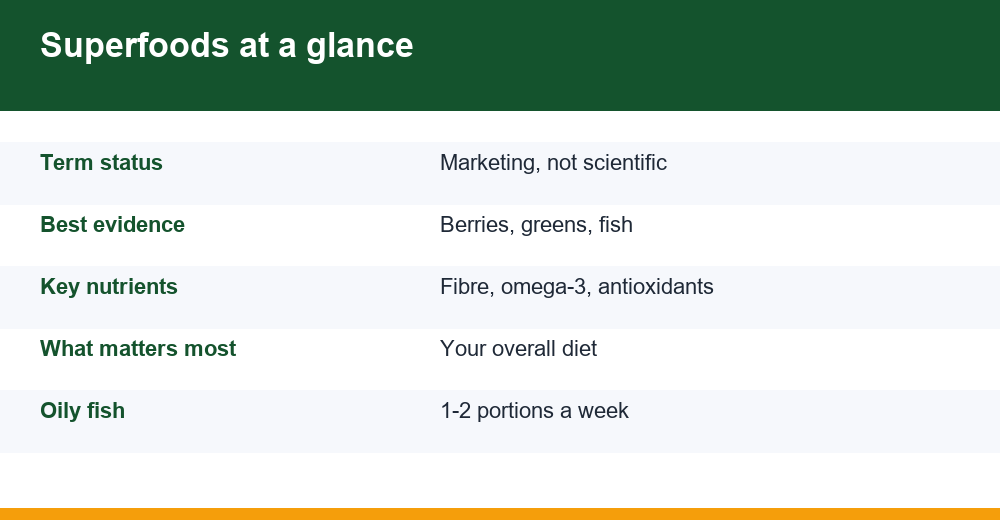
Here is the part the marketing rarely mentions: superfoods is not a scientific category. There is no official or legal definition from bodies such as the US Food and Drug Administration or the European Food Safety Authority, and most registered dietitians rarely reach for the word at all.
The term grew up as a selling tool. Since 2007, EU rules have restricted describing a product as a superfood unless the claim is backed by approved evidence, and UK trading standards take a similar line. The badge, in other words, is working for the brand rather than for your body.
None of that makes these foods worthless, far from it. It simply means the value lives in the nutrients and in the overall pattern of your meals, not in a glossy word printed on the front of a packet.
- No single food ‘detoxes’ your body or cancels out an unbalanced diet.
- Exotic and expensive rarely mean more nutritious than local staples.
- Whole foods usually beat concentrated powders, shots and extracts.
What Makes a Food Nutrient-Dense
When nutrition scientists talk about these foods, the phrase they actually use is nutrient density. A nutrient-dense food delivers plenty of good things, vitamins, minerals, fibre, healthy fats or quality protein, for relatively few calories.
That is why a handful of lentils or a bowl of berries earns its reputation, while a sugary drink dusted with a trendy extract does not. The benefit comes from the whole food working together: fibre slowing digestion, plant compounds and vitamins arriving as one package rather than in isolation.
It helps to picture two dials. Energy density is how many calories a food packs into each bite; nutrient density is how much nourishment comes alongside them. The foods worth leaning on sit high on the second dial, so they feed you well without tipping your day into excess.
So when you weigh up a food, a few simple signals matter far more than any label on the front:
- Plenty of fibre from vegetables, fruit, wholegrains and legumes.
- Healthy unsaturated fats, such as those in oily fish, nuts and olive oil.
- A broad range of vitamins and minerals rather than one heavily promoted nutrient.
- Colour and variety, since different plant pigments tend to bring different benefits.
15 Nutrient-Rich Foods Worth a Regular Spot
You will notice something reassuring about most popular superfoods lists: the items are humble, affordable and probably already somewhere in your kitchen. Here are 15 that genuinely earn their place, with an easy way to enjoy each one.
| Food | Standout nutrients | Easy way to enjoy it |
|---|---|---|
| Blueberries and other berries | Fibre, vitamin C, anthocyanins | Stir through porridge or yoghurt |
| Leafy greens (spinach, kale) | Folate, vitamin K, lutein | Wilt into eggs, soups or a curry |
| Broccoli and cruciferous veg | Vitamin C, fibre, sulforaphane | Roast or add to a quick stir-fry |
| Oily fish (salmon, sardines) | Omega-3, vitamin D, protein | Bake, or use tinned on toast |
| Lentils and beans | Plant protein, fibre, iron | Bulk out soups, stews and chilli |
| Nuts (walnuts, almonds) | Unsaturated fats, vitamin E | A small handful as a snack |
| Seeds (chia, flax, pumpkin) | Fibre, plant omega-3, minerals | Sprinkle over cereal or salad |
| Oats and wholegrains | Beta-glucan fibre, B vitamins | Morning porridge or overnight oats |
| Yoghurt and kefir | Protein, calcium, live cultures | Breakfast bowl or smoothie base |
| Eggs | Complete protein, choline | Boiled, poached or scrambled |
| Extra-virgin olive oil | Monounsaturated fat, polyphenols | Drizzle over veg or a salad |
| Sweet potato | Beta-carotene, fibre, vitamin C | Roast in wedges or mash |
| Beetroot | Dietary nitrates, folate | Roast, grate raw or blend |
| Garlic and onions | Prebiotic fibre, sulphur compounds | The base of any savoury dish |
| Green tea | Polyphenols (catechins) | A warm drink in place of a fizzy one |
Read the list as a pantry, not a prescription. You do not need all 15 in a day; rotating through them across a week is far more realistic and, honestly, more enjoyable.
If you are not sure where to start, pick two or three you already like and build small habits around them, a berry topping here, a tin of beans there. Momentum from a few easy wins tends to carry you much further than an ambitious overhaul you cannot keep up.
Berries, Greens and the Antioxidant Story
Two groups do much of the work on any sensible list: berries and leafy greens. Berries are rich in antioxidants called anthocyanins, the pigments behind their deep colours, while greens bring folate, vitamin K and eye-friendly lutein.
In large population studies, people who eat plenty of these foods tend to have better heart health, though that is an association rather than proof that any single berry does the work. Many of them also overlap with anti-inflammatory foods, which is a big part of their long-term appeal.
You do not need exotic imports here either. Everyday raspberries, strawberries, blackberries and blueberries all count, as do frozen mixes, and hardy greens like kale, cabbage and rocket are easy to keep on hand. Variety across the week matters far more than chasing any one ‘best’ berry.
A couple of gentle cautions are worth knowing. Spinach and beetroot are high in oxalates, so anyone prone to kidney stones may prefer to keep portions moderate. And if you take the blood thinner warfarin, leafy greens affect how it works, so aim for a steady, consistent amount and talk it through with your clinician rather than suddenly loading up or cutting back.
Fermented Foods, Fibre and Gut Health
Your gut is home to trillions of microbes, and they thrive on fibre. Legumes, oats, vegetables and wholegrains provide the sort of fibre these bacteria ferment, while fermented foods such as live yoghurt, kefir, sauerkraut and kimchi add helpful cultures of their own.
If that world interests you, our guide to gut health foods goes into more detail. The simplest habit is variety: aim for a wide range of plants across the week rather than the same two vegetables on repeat.
Stay realistic about probiotics, though. The evidence is promising but often strain-specific, so a product that helps one person may do little for another. If you are increasing fibre, build it up gradually and drink enough water, or you may feel bloated for a while as your gut adjusts.
None of this needs to be complicated. A rotating mix of beans, wholegrains, fruit, vegetables and the occasional fermented food gives your gut plenty to work with, and small daily choices quietly add up over the years.
Cooking and Storing to Keep the Goodness In
A little care in the kitchen helps you get more from these foods. Some nutrients shrug off heat, while others fade with long cooking. Gentle preparation can even make certain plant compounds easier for your body to absorb, so how you cook matters almost as much as what you cook.
- Steam or roast vegetables rather than boiling them for ages, to hold on to vitamin C and folate.
- Pair iron-rich plants like lentils and spinach with a little vitamin C, such as a squeeze of lemon, to aid absorption.
- Add a drizzle of olive oil to vegetables, which helps you take in fat-soluble nutrients like beta-carotene.
- Keep berries and greens cold and eat them within a few days, as their freshness fades over time.
Frozen options sidestep much of this, since freezing locks nutrients in soon after picking. And try not to overthink it: a quickly cooked vegetable you actually eat will always beat a perfectly prepared one left forgotten in the drawer.
Herbs and spices earn a mention too. Garlic, ginger, fresh herbs and a little black pepper add flavour without extra salt, which makes it easier to enjoy vegetables often. Eating them regularly, rather than perfectly, is really what makes the difference over time.
Eating Well Without the Hype (or the Price Tag)
Here is the reassuring part: eating this way does not require imported wellness powders or a big budget. Frozen berries are picked ripe and are just as nutritious as fresh, tinned oily fish is cheap and convenient, and dried or tinned legumes cost very little per portion.
- Buy frozen fruit and veg; they count fully and they last for weeks.
- Choose tinned salmon, sardines or mackerel for omega-3 on a budget.
- Keep tins of beans, lentils and chickpeas as a store-cupboard base.
- Let seasonal, local produce, rather than price or fashion, guide your choices.
Do keep portions in mind. Nuts, seeds and olive oil are wonderfully nutritious but also calorie-dense, so a small handful of nuts, roughly 30g, is a sensible daily amount rather than a bottomless bowl in front of the television.
| Food | A sensible everyday portion |
|---|---|
| Nuts | A small handful, about 30g |
| Oily fish | One to two 140g portions a week |
| Cooked beans or lentils | Around three heaped tablespoons |
| Olive oil | A tablespoon or so for cooking or dressing |
| Berries | A large handful, roughly 80g |
Putting It All on One Plate
Knowing the foods is one thing; assembling them is another. A simple rule of thumb is to build each plate around a few parts and let the nutrient-rich options fill them naturally.
- Half the plate: vegetables and some fruit, aiming for a few different colours.
- A quarter: a quality protein such as fish, eggs, beans or lentils.
- A quarter: a wholegrain like oats, brown rice, wholemeal bread or barley.
- A little healthy fat: olive oil, a scatter of seeds or a few nuts.
In practice that might look like porridge with berries and seeds in the morning, a lentil and spinach soup at lunch, and baked salmon with broccoli and sweet potato for dinner, with yoghurt or a piece of fruit if you fancy something sweet.
Drinks count as well. Water and unsweetened tea or coffee are gentle everyday choices, while sugary drinks add calories with little nourishment. Even fruit juice, for all its healthy image, is best kept as an occasional glass rather than a daily habit.
None of it is dramatic, and that is rather the point. Consistency, day after ordinary day, does far more for your health than any occasional exotic purchase ever could.
Safety, Balance and a Reality Check
If there is one message worth keeping, it is this: the strongest evidence supports your overall eating pattern, not any single ingredient. A practical, trustworthy starting point is the NHS Eatwell Guide, which shows how the pieces fit together across a day.
A few sensible safety notes, since food and health are personal:
- Oily fish: one to two portions a week is a good target; if you are pregnant or trying to conceive, keep to no more than two portions and avoid shark, swordfish and marlin.
- Warfarin and greens: keep your vitamin K intake steady and speak to your GP or pharmacist before making big changes.
- Allergies: nuts, seeds, fish and dairy are common triggers, and whole nuts are a choking risk for young children.
- Supplements and extracts: concentrated powders or high-dose pills are not the same as whole food and can interact with medicines, so more is not better.
Finally, a friendly reminder. No list of superfoods replaces balanced, varied eating, and this article is general information, not medical advice. If you are pregnant, managing a health condition, taking medication or living with persistent symptoms, please speak to a GP, pharmacist or registered dietitian before making significant changes to your diet.
Ultimately, no single item makes or breaks a diet. Treat superfoods as genuinely nutritious building blocks, enjoy a wide variety of these superfoods across the week, and remember that the overall pattern of your meals matters far more than any one so-called superfood.
One last reminder: chasing superfoods should never crowd out the basics. The most reliable “superfoods” are often the affordable, everyday ones already in your kitchen.
Frequently Asked Questions
Are superfoods actually good for you?
The foods behind the label really are nutritious, but the word itself is marketing rather than science. Berries, greens, oily fish, nuts and legumes all deserve a place on your plate, yet none is magic. What matters most is a varied, balanced diet kept up over time.
What is the single healthiest food to eat?
There is not one. Nutrition works as a pattern, so no single food can cover every base or make up for an otherwise poor diet. Aim for variety across the week, plenty of plants, some quality protein and healthy fats, and you are already doing the important part.
Do I need expensive superfood powders?
Usually not. Powders and shots can be convenient, but they are rarely better than affordable whole foods like frozen berries, tinned fish, oats and beans. Spend the money instead on a wider variety of everyday fruit, vegetables and wholegrains, and you lose very little.
Can eating these foods prevent disease?
No food prevents or cures disease on its own. Diets rich in vegetables, fruit, wholegrains, legumes and oily fish are linked with better long-term health, but these are associations, not guarantees. Treat good food as one supportive habit alongside sleep, movement and professional care.