When your head is stuffy and your throat feels like sandpaper, the best natural remedies for a cold won’t cure the virus, but they can make the miserable days far more comfortable. A common cold is caused by a virus, it is self-limiting, and it usually clears on its own within a week or two. What follows are gentle, traditional home comforts to help you rest, breathe a little easier and feel more like yourself while your body does the real work.
Table of Contents
What a Cold Really Is (and Why There’s No Quick Cure)
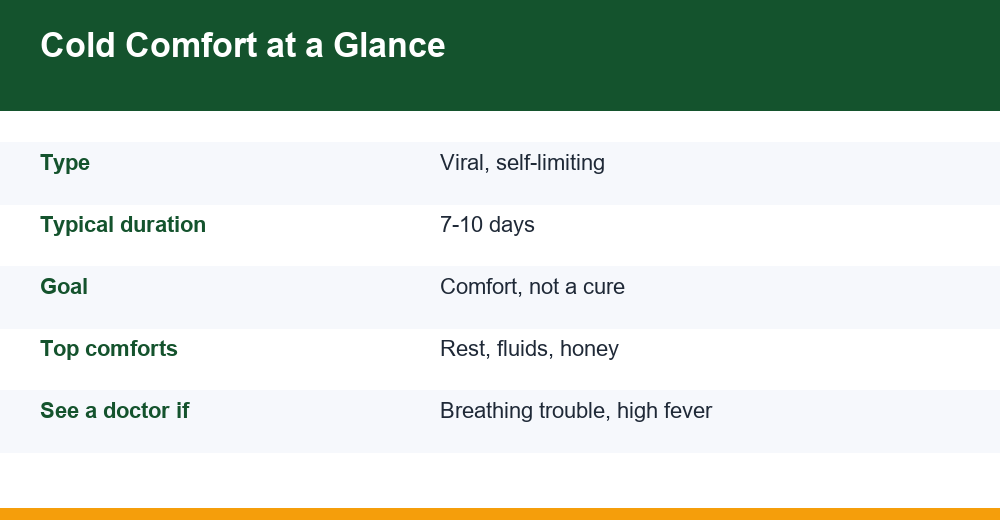
A cold is an infection of the nose and throat caused by any of hundreds of different viruses. Because it is viral, antibiotics do nothing for it, and there is no product on any shelf that genuinely cures it. Most colds fade on their own within 7 to 10 days, though a mild cough can linger a little longer.
That is the honest starting point, and it matters. Everything in this guide is about comfort, not cure. Easing a sore throat or a blocked nose helps you rest and cope, but it does not dramatically shorten the infection. Setting that expectation early tends to make the whole soggy experience far less frustrating.
Colds spread easily through the tiny droplets we cough and sneeze into the air, and through the hands and surfaces we all touch. You tend to be most contagious in the first few days, when symptoms are at their peak. Washing your hands often, catching coughs and sneezes in a tissue, and staying home when you can are small kindnesses that protect the people around you.
A cold usually announces itself gradually over a day or two, which is one way it differs from flu. Typical signs include:
- A runny or blocked nose, sneezing and a scratchy sore throat
- A mild cough, a slight headache and a generally run-down feeling
- Symptoms that build slowly, unlike flu, which often arrives suddenly with a fever, aches and exhaustion
How Natural Remedies for a Cold Actually Help
It helps to be clear about what these home measures do and do not do. Natural remedies for a cold work mainly by soothing symptoms: warmth loosens congestion, honey coats an irritated throat, and plenty of fluids keep you hydrated so mucus stays thin and easier to shift. None of that kills the virus, but comfort is a worthy goal when you feel rotten.
Think of them as supportive care drawn from long traditions of home nursing. Some have gentle, plausible reasons to help; a few have modest research behind them; and others are simply comforting rituals that make a rough few days more bearable. We will be honest about which is which as we go.
Realistically, gentle home comforts can:
- Ease a sore throat, cough or blocked nose just enough to let you rest
- Keep you hydrated and a little more comfortable through the worst days
- Offer a calming routine when you feel wiped out and low on energy
10 Home Comforts to Try When You’re Under the Weather
The best natural remedies for a cold are usually the simple ones already in your kitchen. Here are ten low-cost, time-honoured comforts people reach for when a cold sets in. Try the ones that appeal to you and skip anything that does not suit you or your household.
| Comfort | Why it soothes | Keep in mind |
|---|---|---|
| Rest | Frees up energy for your body’s recovery | Do not push through; a duvet day is sensible |
| Fluids | Keep mucus thin and prevent dehydration | Water, squash or herbal tea; go easy on alcohol |
| Warm honey drinks | Coat and calm a raw, coughing throat | Never for babies under 1 (botulism risk) |
| Ginger and lemon | Warming, aromatic and comforting to sip | Traditional comfort, not a proven cure |
| Chicken soup or broth | Warm, salty, hydrating and easy to eat | A bowl of comfort more than a medicine |
| Steam from a shower | May briefly ease a stuffy nose | Mind hot water; scald risk (see below) |
| Salt-water gargle | Soothes a sore, scratchy throat | Not for young children who may swallow it |
| Humid air | Stops nasal passages drying out | Clean humidifiers often to avoid mould |
| Saline drops or spray | Gently clear a blocked nose | Widely used and safe for most ages |
| Extra sleep | Recovery happens while you rest | Prop pillows up if a cough disturbs you |
The rest of this guide digs into the comforts worth explaining in more detail, along with a few popular options whose evidence is thinner than the hype might suggest.
Warm Drinks: Honey, Ginger and Lemon
A hot mug is often the first thing we reach for, and for good reason. Warm liquids can ease a stuffy nose and feel soothing on a raw throat. A classic mix is honey with lemon in warm (not boiling) water, sipped slowly through the day.
Honey and lemon
Honey is the standout here. It has a genuine, if modest, reputation for calming coughs in adults and in children over one year old, and it is pleasant to take. There is one firm safety rule that never bends: never give honey to a baby under 12 months, because of the small but serious risk of infant botulism. A squeeze of lemon adds a little vitamin C and a fresh taste, though it will not shorten your cold.
Ginger
Ginger has been used in home kitchens and traditional medicine for centuries, most famously for nausea and as a warming spice. Grated fresh into hot water with a spoon of honey, it makes a comforting drink for a sore throat. Treat it as a soothing tradition rather than a proven cold treatment, and enjoy it for the comfort.
Beyond sweet drinks, a mug of warm broth or a bowl of chicken soup is one of the oldest comforts there is. It is warm, a little salty and easy to manage when your appetite has faded, and it helps keep your fluids up. No one has found a magic ingredient in it, but as gentle, hydrating comfort food it earns its place.
If a cough or congestion keeps you up, a warm, caffeine-free drink at bedtime is far kinder than strong tea or coffee. Some of the same herbal teas that help with sleep double nicely as a gentle evening cold drink.
A few sensible cautions for warm drinks and any herbal preparations:
- Let very hot drinks cool a little, as scalding liquid can irritate a sore throat
- Honey is off-limits for babies under one year old
- If you are pregnant, breastfeeding or take regular medication, check with a pharmacist before using strong herbal preparations or supplements
Steam, Salt Water and Soothing Scents
Steam, with caution
Steam is a traditional favourite for a blocked nose, and many people find a warm, steamy shower briefly makes breathing feel easier. Be honest about the evidence, though: research on steam inhalation is limited and unconvincing, and leaning over a bowl of just-boiled water carries a real risk of scalds and burns, especially for children.
If you like steam, the gentlest and safest route is simply to sit in a warm, steamy bathroom for a few minutes. If you use a bowl, let the water cool briefly first, keep a comfortable distance, and never let children do this unsupervised.
Salt-water gargle
A salt-water gargle is a cheap, time-honoured way to soothe a sore throat. Stir about half a teaspoon of salt into a glass of warm water, gargle for a few seconds, then spit it out. It is not suitable for young children who might swallow it, and it will not shorten your cold, but it can feel genuinely soothing.
Saline for a blocked nose
A saline nasal spray or a few saline drops can help loosen and clear a stuffy nose, and they are gentle enough for most ages, including babies when you use a product made for them. If you prefer a nasal rinse, use only cooled boiled or distilled water with a clean device, and follow the instructions on the pack rather than improvising.
Soothing scents
Aromatic vapours like menthol or eucalyptus will not clear an infection, but the scent can make a blocked nose feel a little less stuffy. If you are curious about using scents at home, our guide to essential oils for beginners covers safe dilution and which oils to avoid around young children and in pregnancy. Never apply undiluted oils to skin or take them internally.
Rest, Sleep and Giving Your Body Time
If one remedy genuinely earns its place, it is the least glamorous of all: rest. Sleep is when your body does much of its repair work, and pushing through a cold tends to drag it out and spread it to everyone around you. Slowing down is not laziness; it is sensible self-care.
A few practical comfort tricks can help you actually sleep when you feel congested. Prop your head up with an extra pillow to ease a night-time cough and post-nasal drip, keep the room comfortably warm but not stuffy, and give yourself full permission to do less than usual.
Do not worry too much about eating a lot when your appetite dips, as wanting less food with a cold is completely normal. Focus instead on sipping fluids regularly and choosing whatever feels easy and appealing, whether that is soup, toast, fruit or a warm drink. Getting enough to drink matters far more than forcing down big meals while you feel rough.
- Go to bed earlier, and nap during the day if you can
- Raise your head on pillows to ease congestion at night
- Skip hard workouts; gentle movement is fine, but tough training can wait
What the Evidence Says About Vitamin C, Zinc and More
Plenty of popular remedies get more credit than the science supports, and being clear-eyed here saves both money and disappointment. Here is a fair, honest summary of the most talked-about options and where the evidence currently stands.
| Remedy | What research suggests | Worth knowing |
|---|---|---|
| Vitamin C | Does not prevent colds in most people; may slightly shorten them for some | Food sources are great; mega-doses are not a cure |
| Zinc | Mixed evidence; lozenges taken very early may shorten a cold a little | Can cause nausea; avoid zinc nasal sprays |
| Echinacea | Weak and inconsistent evidence overall | Generally low-risk, but not a reliable remedy |
| Elderberry | Limited, mixed evidence, mostly from small studies | Usually a syrup; not a proven cure, and check labels |
| Garlic | Very little reliable evidence for treating colds | A tasty food, but not a treatment |
| Honey | Reasonable support for easing cough in over-1s | Simple, cheap and pleasant to take |
| Steam inhalation | Little solid evidence of real benefit | Carries a burn risk; a steamy room is safer |
The pattern is clear: comfort measures tend to earn their place, while dramatic cure claims rarely survive scrutiny. If a product promises to banish a cold in 24 hours, treat that promise with healthy suspicion. When you are unsure what to try, a pharmacist is a free, knowledgeable first port of call.
Caring for Children, Older Adults and in Pregnancy
Some people need a little extra care with a cold, and a gentler approach to home comforts. Very young children, older adults, anyone who is pregnant, and people with a long-term condition can become unwell more quickly, so it is worth keeping a closer eye and asking for advice sooner rather than later.
A handful of comforts are best adjusted or avoided for certain groups. When you are unsure, a pharmacist can quickly point you toward what is safe and suitable:
- Babies under one year: never give honey, use only saline drops and products designed for infants, and ask your health visitor or doctor if you are worried
- Young children: skip salt-water gargles and hot-water steam bowls, which carry a scalding risk, and always check the age guidance on any remedy
- Pregnancy and breastfeeding: stick to simple comforts like rest, fluids and warm drinks, and check with a pharmacist before any herbal preparation, supplement or strong essential oil
- Older adults and long-term conditions: watch symptoms a little more closely, and seek advice early if a cold settles on the chest or does not ease
When to See a Doctor
A cold is usually something you can safely ride out at home, but it is important to know the moments that call for professional help. Trust your instincts, and do not wait if something feels genuinely wrong. Seek medical advice if you notice any of the following:
- Difficulty breathing, breathlessness or chest pain
- A very high temperature, or a fever that will not come down
- Symptoms that suddenly get worse, or do not improve after about three weeks
- Coughing up blood, or feeling confused or unusually drowsy
- Concern about a baby, an older person, or anyone with a long-term condition or a weakened immune system
For a clear, trustworthy overview of cold symptoms and self-care, the UK’s NHS guide to the common cold is a reliable place to start. And a reminder that runs through this whole article: this is general wellbeing information, not medical advice. If you are unsure, pregnant, caring for a child, or managing a health condition, speak to a doctor or pharmacist before trying new remedies or supplements.
Ultimately, the most reliable natural remedies for a cold are the humble ones: rest, warmth, fluids and a little patience while the days pass. Be kind to yourself, keep your expectations realistic, and let your body do what it is quietly very good at.
Frequently Asked Questions
How long does a common cold usually last?
Most colds clear up on their own within about 7 to 10 days, though a mild cough or lingering tiredness can hang on a little longer. If your symptoms keep getting worse, or last beyond roughly three weeks, it is worth checking in with a doctor or pharmacist.
Do natural remedies for a cold really work?
They do not cure the virus or shorten it much, but many do ease symptoms so you can rest and feel more comfortable. Honey for a cough and warm fluids for congestion are gentle, sensible choices. Think comfort and self-care rather than a fast fix or a cure.
Can I give honey to my child for a cough?
Honey can soothe a cough in children over one year old and is a popular, pleasant option. Never give honey to a baby under 12 months, though, because of a small but serious risk of infant botulism. For very young babies, ask your doctor about safe alternatives.
Should I take vitamin C or zinc to beat a cold?
For most people, vitamin C does not prevent colds and will not cure one, though a normal, food-based intake is always worthwhile. Zinc’s evidence is mixed and it can upset your stomach, so avoid zinc nasal sprays. Overall, rest and fluids matter far more than any single supplement.